

Luxury SUV ownership is starting to feel like more hassle than it’s worth for a growing number of buyers. Between complex tech, turbocharged engines, and rising repair costs, the shine of premium badges isn’t hitting the same way it used to.
That shift is pushing some drivers to look outside the usual German suspects. Mazda has quietly become one of the main beneficiaries, especially with the CX-5.
It doesn’t chase headline-grabbing performance or over-the-top tech. Instead, it leans into simplicity, comfort, and long-term reliability in a way that’s starting to look like the smarter deal.
In order to give you the most up-to-date and accurate information possible, the data used to compile this article was sourced from Mazda and other authoritative sources, including Car and Driver, iSeeCars, and TopSpeed.
Related
76% of drivers say luxury badges aren’t worth it anymore—here’s what they want instead
Respondents prioritized financial security over a fancy new car.
How the CX-5 became a quiet alternative to German luxury SUVs
A closer look at why more buyers are skipping premium badges for Mazda
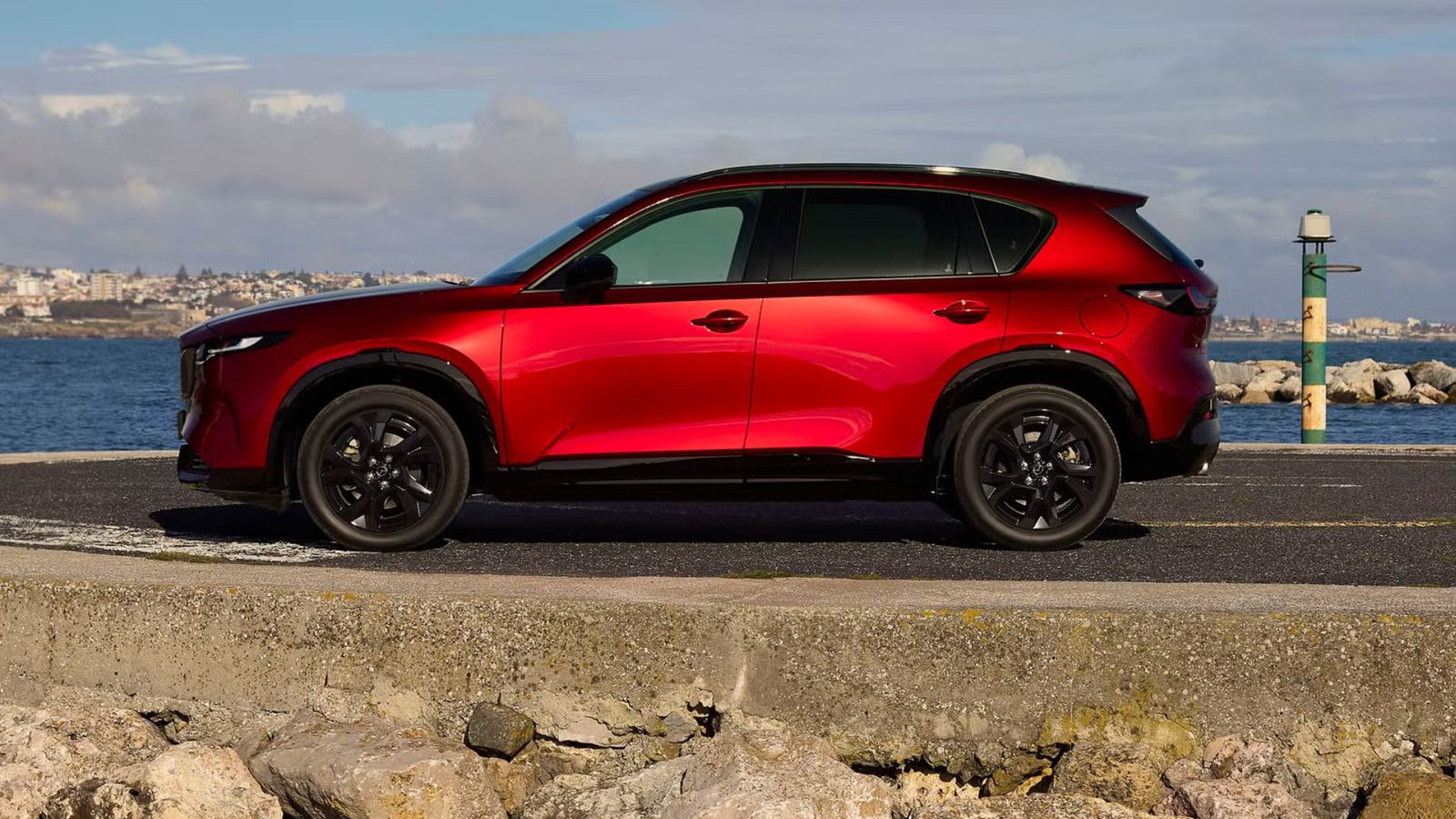
The 2026 Mazda CX-5 didn’t just stumble into the luxury conversation. Mazda has been slowly shaping it into a crossover that appeals to buyers who care more about how a car feels than the badge on the bonnet.
The latest model doubles down on that idea instead of changing things for the sake of it. The biggest fix is space, with a longer wheelbase and body adding around 2.5 inches of extra rear legroom and pushing cargo capacity past 71 cubic feet with the seats down.
That extra room actually matters, because it removes one of the CX-5’s biggest weak spots. A lot of buyers liked everything else about it but still ended up in something like a BMW X3 or Mercedes GLC just for the added practicality.
Credit: Mazda
The redesigned CX-5 basically takes away one of the last excuses to skip it. Mazda also upgraded the interior tech in a big way, swapping the old rotary setup for a huge 15.6-inch touchscreen with Google built in.
It still keeps that clean, upscale Mazda feel, just with a more modern interface. Pricing stays aggressive too, sitting roughly between $31,485 and $40,485, which keeps it well below most German luxury rivals.
Once you factor in reliability and depreciation, the gap gets even harder to ignore. The CX-5 scores 8.1/10 for reliability compared to 7.8 for the BMW X5, and it loses about 42.4 percent of its value after five years versus 56.1 percent for the X5.
That difference adds up quickly in real ownership costs. And it’s why more buyers are starting to see the CX-5 as a smarter long-term play rather than a compromise.
Related
Why This Used Mazda Crossover Won Me Over Instantly
Agile handling, upscale touches, and everyday practicality make this used crossover an instant standout.
Why Mazda doubled down on simplicity instead of complexity
How a conservative engineering choice became a long-term win for owners
Credit: Mazda
The most controversial move Mazda made with the 2026 CX-5 was also one of the simplest. It dropped the turbocharged engine entirely, going against a segment that’s been obsessed with adding more power and complexity.
Instead, it sticks with a naturally aspirated 2.5-liter four-cylinder making 187 horsepower and 186 lb-ft of torque. That’s paired with a traditional six-speed automatic and standard all-wheel drive, which feels almost old-school next to turbocharged and hybrid rivals.
On paper, it doesn’t look like it’s trying to compete on performance at all. But that’s kind of the point, because most buyers aren’t actually using every bit of power modern SUVs advertise anyway.
What they do care about is smooth driving, predictable behavior, and not getting hit with eye-watering repair bills later on. Mazda leans into that reality instead of chasing spec-sheet numbers.
Credit: Mazda
By sticking with a naturally aspirated engine and a traditional six-speed automatic, Mazda sidesteps a lot of the long-term headaches that come with small turbo engines and complex hybrid systems. Turbo setups run hotter and under more stress, while hybrids add layers of batteries, software, regen systems, and extra cooling that all bring more potential failure points down the line.
That’s really the trade-off Mazda is making, and it’s a pretty clear one: durability over bragging rights. While other brands chase big performance numbers in everyday SUVs, Mazda leans into restraint and keeps things simpler under the skin.
The result is an engine that feels more linear and predictable, with fewer complicated systems to maintain. Even the transmission choice avoids some of the durability questions that come with CVTs or multi-clutch setups.
Fuel economy still lands at a solid 24 mpg city and 30 mpg highway, so it’s not like efficiency is sacrificed. And for a lot of buyers, that simpler setup just feels easier to trust long-term, especially as repair costs across the industry keep climbing.
Related
The Perfect Used Three-Row SUV for Driving Enthusiasts With Families
This used three-row SUV blends driving excitement with family comfort, offering luxury, agility, and great value in one package.
Why depreciation and reliability beat horsepower in the real world
The ownership costs that actually shape long-term value
Credit: Mazda
Luxury SUVs have spent years selling the idea that more horsepower automatically means a better ownership experience. In reality, the day-to-day and long-term picture is shaped far more by depreciation and reliability than straight-line speed.
That’s where the CX-5 starts to look like the smarter play against traditional luxury crossovers. Models like the BMW X3 and X5 definitely deliver stronger performance and more advanced engineering, but they also tend to come with higher running costs and steeper value drops over time.
The CX-5 tells a different story when you look at the numbers. Its five-year depreciation sits around 42.4 percent, which is strong for this part of the market, especially compared to the BMW X5’s 56.1 percent drop.
That gap quickly turns into real money over the life of ownership. And when you layer in its solid reliability reputation, the overall value argument starts to get hard to ignore.
Credit: Mazda
An SUV that avoids frequent major repairs doesn’t just save money on maintenance, it also holds its value better because used buyers trust it more. Reputation plays a huge role in the second-hand market, and Mazda has built that trust by focusing on dependable engineering instead of chasing increasingly complex tech trends.
That matters even more as repair costs for luxury SUVs keep climbing. Even relatively small electronic or drivetrain issues on modern European models can lead to four-figure bills, and once warranties expire, the ownership math starts to fall apart quickly.
The CX-5 takes the opposite approach by keeping things simpler underneath. That lower complexity reduces risk while still delivering a cabin and driving experience that feels close to premium.
It also taps into a broader shift in how people view cars. More buyers are valuing long-term sense over badge prestige, choosing something they can keep for years without financial stress. Mazda’s approach fits neatly into that mindset.
Related
10 Most Reliable Luxury SUVs You Can Count On in 2025
These 10 luxury SUVs offer top-tier reliability in 2025, combining premium comfort with proven durability for a worry-free ownership experience.
Why the redesigned CX-5 removes another reason to choose European rivals
More space and a better cabin make the value gap even harder to ignore
Credit: Mazda
For years, one of the main knocks against the CX-5 was simple: it felt premium, but it wasn’t the most spacious option in its class. The 2026 redesign goes straight at that criticism.
A longer wheelbase brings noticeably more rear-seat comfort, making the cabin far more usable for families and adult passengers. That extra 2.5 inches of rear legroom might not sound like much on paper, but in practice it changes how roomy the SUV feels.
Cargo space gets a meaningful bump too, now stretching past 71 cubic feet with the seats folded. That puts it much closer to larger, more expensive rivals in terms of everyday practicality.
The result is a CX-5 that no longer asks buyers to compromise between space and running costs. You can now get Mazda’s reliability and lower ownership costs without giving up the usability that often pushed people toward European alternatives.
Credit: Mazda
The redesigned interior also strengthens the CX-5’s premium feel. Mazda has already built a reputation for cabins that feel more expensive than they are, and this update pushes that even further.
The big change is the addition of a 15.6-inch touchscreen with Google built in, bringing it in line with what modern luxury buyers expect. It updates the tech experience without losing the clean, understated design Mazda is known for, especially compared to some busier interiors in the segment.
Credit: Mazda
What makes the CX-5 especially interesting is how complete the package now feels. It no longer comes across as a “you get this, but lose that” kind of buy.
Earlier versions often asked buyers to live with things like tighter rear seats or less overall space in exchange for strong value and reliability. The 2026 model largely closes that gap and removes most of those trade-offs.
That puts European luxury brands in a tougher position than before. If buyers can get upscale design, solid reliability, lower depreciation, modern tech, and more practical ownership costs in a Mazda, the premium for a German badge becomes harder to justify.
