

What you need to know
- Research company, Omdia, reported on the U.S. smartphone market for Q1 2026, stating it has dipped by 3% YoY.
- The company says that rising memory and storage costs aided this decline, as well as “restrained carrier upgrades.”
- Samsung dropped 5% YoY, but it still led the charge for Android, taking up 24% of the market; however, Apple (down 3%) took the number one spot with 60%.
- The only Android maker to go positive was Motorola, which marked an 18% growth in the U.S. smartphone market.
Reports discussing how smartphones performed in Q1 are surfacing, and they’re telling the story of a struggling market.
The research company Omdia shared a press release this morning (May 27), highlighting how the U.S. smartphone market performed in Q1 2026. According to its research, the market did not perform as well YoY (year-over-year). Omdia states the market dipped by 3% YoY in Q1, as companies shipped 33.4 million units across the country.
The cause? Omdia says “shipments were pressured by a more restrained carrier upgrade environment, rising memory and storage costs, and delayed device launches that compressed sell-through for key premium models.” Though the decline was “modest,” Omdia could not ignore the aforementioned catalysts behind the market’s decline in Q1.
Latest Videos From
You may like
Android Central’s Take
I think what’s most interesting is the 60/40 split between Apple and Android in Q1. The U.S. is nearly split on which devices it’s reaching for: Android or iOS. Samsung still leads the charge for Android, but its still roughly 40% behind Apple (and ~12 million shipped devices behind, too). I’m also quite surprised by Motorola. It’s the only popular Android brand that went positive—and by double digits, at that.
The situation breaks down company performance, too, with Apple leading the charge with 60% of the U.S. phone market. However, the company isn’t unscathed, as Apple posted a 3% dip in Q1. Coming in second is Samsung with 24% of the U.S. market, shipping 7.9 million phones. Omdia says that the Korean OEM actually marked a 5% decline, which was likely aided by the late Galaxy S26 launch. It also states that despite the S26 series’ later debut, it outperformed the Galaxy S25 by 25% in pre-orders.
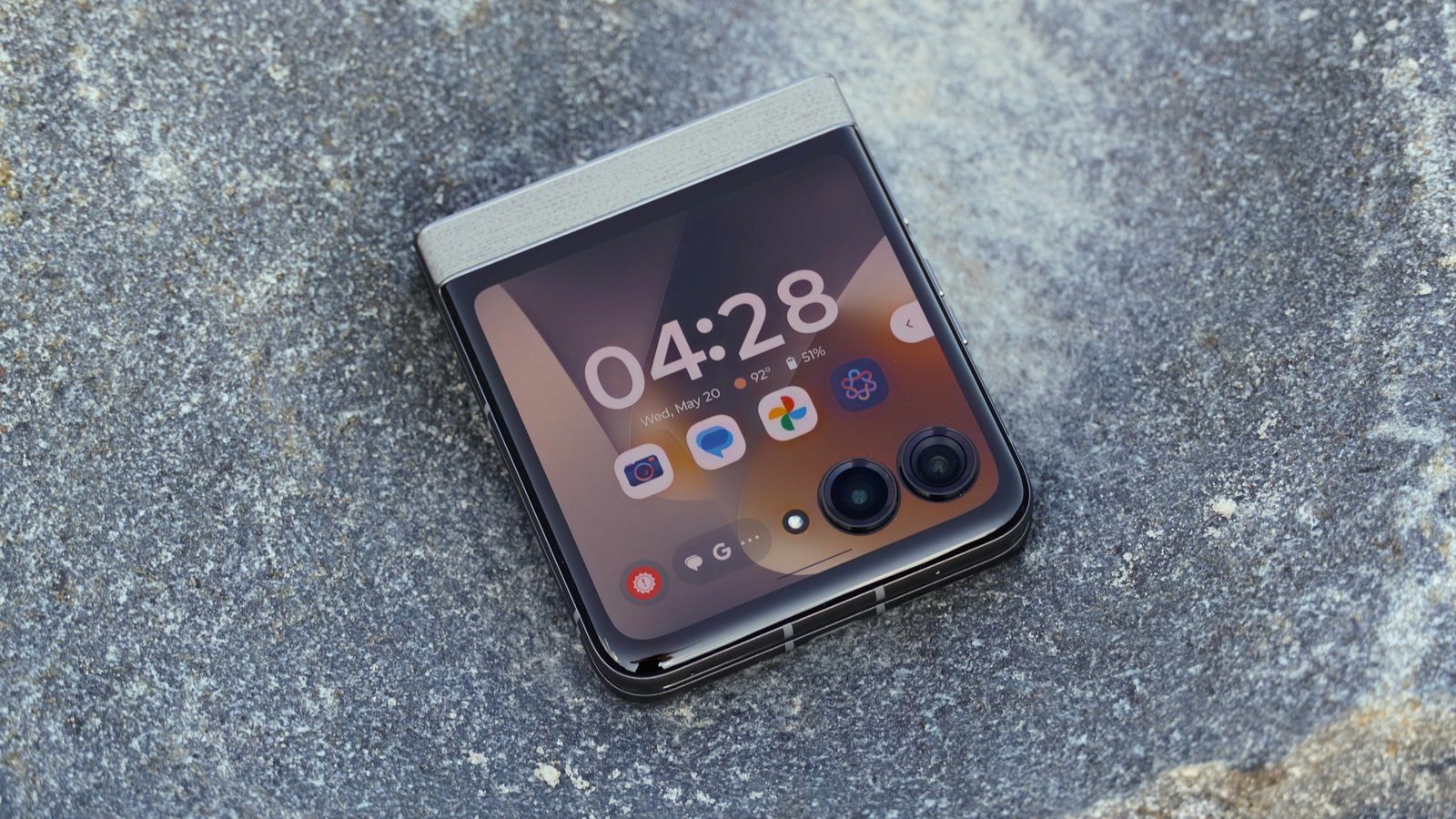
Google fell quite short, shipping 800,000 phones in Q1 and accounting for 3% of the market. However, Motorola made a splash early this year. The company took up 11% of the market from January to March, and is the only company that went positive with an 18% growth. Omdia’s data suggests this could be attributed to its “refreshed” Moto G selection.
A lot of moving parts
(Image credit: Omdia)
Omdia breaks down the market in terms of sectors, such as the premium and entry-level (even mid-range). Its report says that the premium market (devices priced $800 or more) saw a small 1% decline in Q1. Curiously, entry-level devices increased by 8%. These phones, typically priced under $300, could’ve been aided by prepaid plans and the like. The research company predicts that the struggles hounding the market early in 2026 will continue.
It projects that 2026 could decline by 4% overall for the U.S. smartphone market.
We’re having a different discussion than we were earlier this year when Q4 2025 reports came out. Now, this was a different story, as that report concerned global smartphone shipments. Either way, globally, smartphones rose by 2.3%, and Samsung and Apple led the charge. Samsung shipped 61.2 million units globally in Q4 2025, taking up 18.2% of the market. Apple took up 24.2%, shipping 81.3 million units.
