

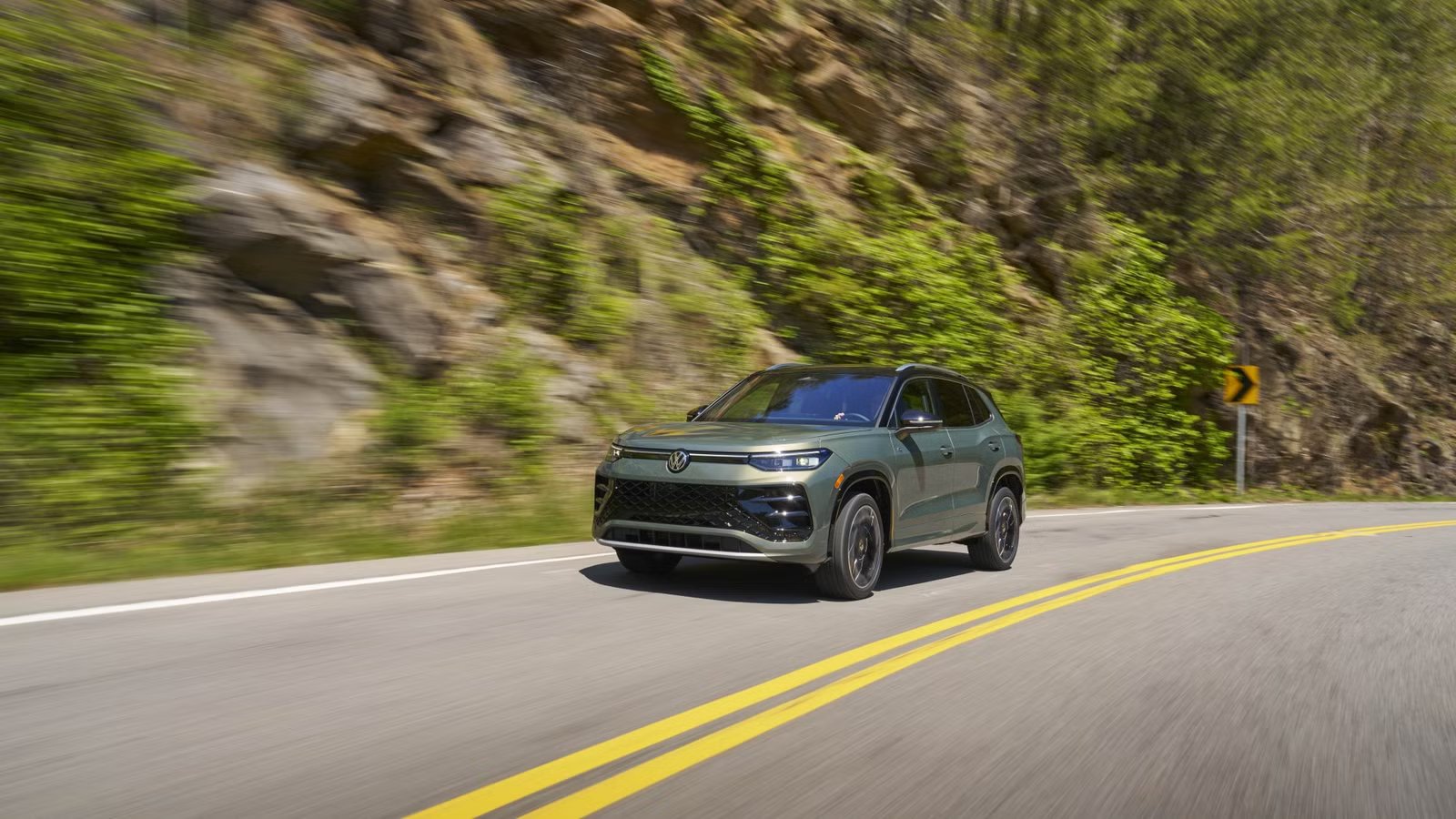
German SUVs don’t exactly have a reputation for being trouble-free, and reliability usually isn’t the first thing people associate with them. European luxury models tend to be a bit of a trade-off: brilliant to drive, but complicated enough that things can get expensive when they go wrong.
Brands like BMW, Mercedes, Porsche, and Audi have basically defined the segment. The pattern is pretty consistent across all of them—the more power, tech, and refinement you add, the more painful the running costs tend to be over time.
Still, tucked away in the mix is one German SUV that doesn’t really follow that rulebook. It’s often overlooked by buyers, but it quietly challenges the usual expectations about what ownership is going to look like.
Related
10 Most Reliable Luxury SUVs You Can Count On in 2025
These 10 luxury SUVs offer top-tier reliability in 2025, combining premium comfort with proven durability for a worry-free ownership experience.
Why reliable German SUVs are so rare
When engineering gets complicated, costs follow
Credit: Audi
There’s a pretty wide gap between great engineering and long-term dependability. The same things that make German SUVs so enjoyable to drive are often the ones that make them pricey to keep running and repair.
The price of complexity
Credit: Audi
A Consumer Reports long-term ownership study shows a clear trend: Audi, BMW, Mercedes, Porsche, Land Rover, and Volvo all sit near the top for ownership costs. The longer you keep them, the more expensive they tend to get.
A lot of that comes down to how they’re engineered. Turbocharged German engines deliver great performance but often need premium fuel and strict servicing, while dual-clutch transmissions add more maintenance than traditional automatics.
Modern SUVs are also packed with sensors and electronics, which makes repairs more complex. According to RepairPal, average annual repair costs across all vehicles are about $657.
For German luxury SUVs, that number jumps to roughly $900 to $1,265 a year in unexpected repairs alone. That’s the trade-off for all the performance and tech packed into them.
The dependability gap
Credit: NetCarShow.com
It’s easy to see why German SUVs tend to drop in value faster than most. The reliability gap between them and the wider market actually grows as they age.
Looking at J.D. Power’s vehicle dependability study, which tracks owners of three-year-old cars, German brands usually land below the industry average. They often start strong in initial quality, but the long-term numbers don’t hold up as well.
Porsche is a bit of an outlier, ranking second among luxury brands in the 2024 dependability study. Even so, it still shows up much lower in Consumer Reports’ maintenance cost rankings, sitting around 27th place.
The overall pattern is pretty clear: most German SUVs are built to shine in the first few years, not necessarily to be kept for the long haul. That’s why they often make more sense as leases than long-term purchases.
Related
BMW vs. Mercedes vs. Audi: The most reliable luxury brand revealed
When it comes to dependability, the 2025 J.D. Power rankings give BMW, Mercedes, and Audi a clear order.
Where the usual suspects don’t quite deliver
And why expectations don’t always match reality
Credit: NetCarShow.com
Most German SUV buyers end up cross-shopping BMW and Mercedes models, but two other names usually sneak into the conversation: the Porsche Macan and Audi Q5. On paper, both look like solid alternatives with plenty going for them.
The reality is a bit less convincing. Neither one really hits the mark when you stack them up against the standard you’d expect in this space.
The Porsche Macan looks like a trap
Credit: NetCarShow.com
The Macan often gets brought up as one of the more reliable options outside the usual BMW and Mercedes crowd. In J.D. Power’s 2024 Vehicle Dependability Study, it even picked up an award as the most dependable compact premium SUV.
Consumer Reports also ranks it as the most predictably reliable model in Porsche’s lineup. Those are solid credentials, but they don’t really paint the full picture.
Kelley Blue Book estimates the five-year cost of owning a 2024 Macan at $57,884. That’s a big jump compared to the Q5, which comes in at around $42,181 over the same period—roughly a $15,700 gap.
RepairPal also pegs the Macan’s annual maintenance cost at about $1,265. CarEdge adds another layer, estimating it costs around $6,717 more than the average luxury SUV to maintain over its first 10 years.
The Macan is reliable, just in a very Porsche-specific way. It might not be constantly in the shop, but it’s still far from cheap to live with.
The Audi Q5 comes close, but still falls short
Credit: Audi
The Q5 is Audi’s best-selling SUV and one of the most familiar names in the segment. Even with that popularity, it’s tough to fully back when reliability comes into the picture.
Consumer Reports gives it a below-average reliability score of 42 out of 100. RepairPal also ranks it 11th out of 14 luxury midsize SUVs, with a 3.0 out of 5.0 reliability rating.
What really stands out is how often it ends up needing attention. Q5 owners average about 1.2 unscheduled repairs per year, compared to an industry average of just 0.4, and that’s before even counting roughly $928 in scheduled maintenance.
It’s still a strong all-round SUV in a lot of ways. But if reliability is the main priority, the Q5 just doesn’t quite get there.
Related
10 Most Reliable Used German Cars Under $15,000
These 10 reliable used German cars offer premium engineering and solid dependability—all for under $15,000.
Why Volkswagen is worth another look
A quieter option in the German lineup
When people look at German luxury SUVs, Volkswagen usually doesn’t even make the shortlist. It doesn’t have the same premium badge appeal, so it often gets overlooked.
But when you zoom in on ownership costs, it quietly stands out as one of the most sensible choices in the German lineup. The numbers make that pretty clear.
Here’s what the real-world data actually shows
Credit: NetCarShow.com
A recent iSeeCars study looked at more than 330 million vehicles, factoring in reliability, safety, and resale value. In that dataset, the Volkswagen Tiguan came out as the top-ranked German compact SUV with a quality score of 7.4.
CarEdge also puts its 10-year maintenance cost at about $8,197. That actually comes in below the average luxury SUV over the same period.
Compared to the Macan, it’s really not close. With German SUVs, $1,000+ yearly repair bills are pretty normal, which is why the Tiguan’s lower-cost ownership stands out as something of an exception.
The current third-generation model launched in 2024 and uses Volkswagen’s 2.0-liter EA888 turbocharged inline-four paired with a traditional eight-speed automatic. It may not be as sharp as the dual-clutch setup in the Q5, but it’s the kind of simple, proven combo that helps keep running costs down.
The Tiguan is built to go the distance
Credit: NetCarShow.com
Even though Porsche, Audi, and Volkswagen all sit under the same umbrella, the Tiguan feels like it was built with a very different mindset. Where the Porsche and Audi SUVs lean heavily into performance and polish, the Tiguan is more about durability and keeping things simple.
The 2024 model has also had a relatively quiet start, with just one recall tied to a rearview camera issue. It’s also logged only 39 NHTSA complaints in its first year, which is a fairly low figure for the segment.
Base Trim Engine
2L I4 ICE
Base Trim Transmission
8-speed Tiptronic automatic
Base Trim Drivetrain
All-Wheel Drive
Base Trim Horsepower
201 HP @5000 RPM
Base Trim Torque
221 lb.-ft. @ 1500 RPM
Base Trim Fuel Economy (city/highway/combined)
22/29/25 MPG
Make
Volkswagen
Model
Tiguan
Segment
Compact SUV
For comparison, the first model year of the current-generation 2023 Mercedes GLC-Class SUV saw 11 recalls and 60 complaints. That’s a noticeably busier track record next to the Tiguan’s relatively quiet start.
The Tiguan also holds a RepairPal reliability score of 3.0 out of 5.0, which isn’t flashy but is fairly steady. On top of that, parts are widely available, and most independent mechanics are comfortable working on Volkswagens.
That’s not always the case with something like a Macan or Q5. Outside of specialist shops, owners can run into limitations simply due to how brand-specific those systems are.
Volkswagen’s approach is generally more accessible, and that practicality tends to add up over years of ownership.
Related
The Most Reliable New SUV You Can Buy for Under $45,000
This dependable SUV combines durability, comfort, and smart tech, making it a top pick under $45K for buyers who value long-term peace of mind.
The balancing act behind German SUVs
Performance, complexity, and long-term costs in tension
Credit: NetCarShow.com
Reliability in the German SUV world doesn’t quite mean what it does elsewhere. It’s less about flawless engineering and more about how well a vehicle holds up without turning ownership into a money pit.
In other words, the question isn’t just which brand builds the best SUV. It’s which one can be kept long-term without the costs getting out of hand.
The Tiguan’s true competition
Once you look beyond German rivals and compare the Tiguan to the wider SUV market, its value case gets even stronger. The 2026 Tiguan starts at $30,805 for the base model, well under the roughly $50,000 average price of a new vehicle in the U.S.
That makes it the most affordable German SUV by a wide margin. It also comes with an estimated annual maintenance cost of about $518, which keeps running costs firmly on the lower end of the segment.
That’s less than half what Q5 owners typically spend, and way below what Macan ownership tends to run. Even with that lower price tag, the Tiguan still doesn’t feel stripped down.
You get a 12.9-inch touchscreen and a 10.25-inch digital cockpit as standard. It also comes with front and rear parking sensors, adaptive front lighting, and a full suite of driver assistance tech including adaptive cruise control.
Most German SUVs make you climb the trim ladder (and the price ladder) to get that kind of kit. The Tiguan is one of the few that actually loads up its base model without inflating the ownership cost.
The Tiguan is the German SUV worth holding onto
Credit: NetCarShow.com
A Porsche or Audi badge still carries a certain prestige that plenty of luxury buyers are chasing. But getting that German engineering experience without the usual ownership costs is something most SUVs don’t really manage.
The Tiguan gets closer to that balance than anything else in its class. Across different datasets and ownership studies, the same pattern keeps showing up.
It’s not the quickest, flashiest, or most engaging German SUV out there, but it is one of the more dependable long-term choices. If you want the badge and engineering without the four-figure yearly maintenance headaches, the Tiguan quietly makes a strong case for itself.
