

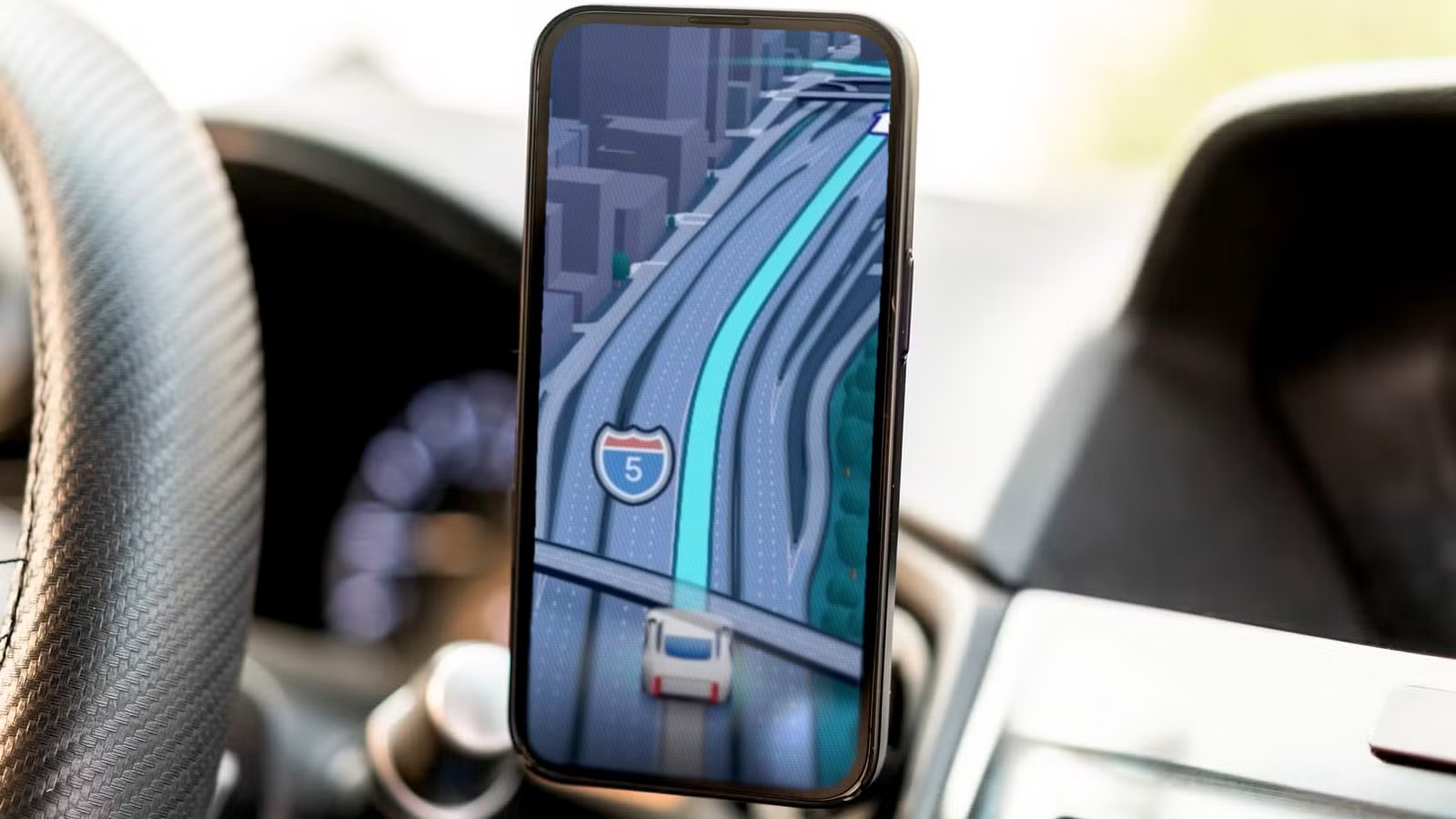
Using Google Maps for navigation is great. It combines live traffic updates, changing routes, and voice commands all from my phone. However, the heavy demands of constant GPS pings, ongoing data streaming, and a bright screen drain even large batteries very quickly. However, you can make a quick change to a minor setting to see a major benefit.
The catch is that Google has only made this power-saving feature available for the Pixel 10, Pixel 10 Pro, Pixel 10 Pro XL, and Pixel 10 Pro Fold so far. It started rolling out last Fall, and while it still hasn’t been made available to more phones, we expect it to eventually be more widely available.
The hidden cost of live navigation
It is a massive drain on your battery
Google Maps is perfect for traveling by car, bus, and on foot, especially when you change your settings to fit your style. However, this precision has a significant downside for your phone. A navigation app is hard on a phone’s battery when it’s unplugged, since the phone needs intensive processing to keep you on the right path.
To function, Google Maps has a detailed interface that relies on continuous GPS tracking, live traffic data downloads, and high screen brightness. The application has to ping satellites to pinpoint your geographical location at any second.
The app also pulls in real-time speeds, incidents, and congestion information from millions of other drivers. It uses machine learning to dynamically update your route and estimated time of arrival, automatically rerouting you if an accident or slowdown is detected. It’s basically doing a lot at once.
Since these continuous location and data services are demanding, the visual part makes the issue worse. Navigating safely means the full-color map must be clearly visible in bright daylight, forcing the screen to stay lit at max levels.
These overlapping demands force the phone processor and display to work overtime, pulling a large amount of power. Since the device doesn’t rest its background computing or dim its display, a driver relying on the app for hours will likely find the device drained before reaching their destination if they don’t plug it in.
How a quick settings tweak extends your driver
Turn-by-turn navigation is a battery killer
Credit: Jorge Aguilar / How To Geek | Google
Turn-by-turn navigation needs constant GPS tracking, real-time data fetching, and an active, bright screen. A recent update has a feature for users of newer devices like the Pixel 10 series, offering a power-saving mode designed to lower this battery drain. To use this tool, you need to make a quick adjustment within the app settings before you hit the road.
Open the Google Maps app, tap on your profile picture in the top-right corner, select Settings, and then choose Navigation. From there, look under the Driving options section to find the power-saving mode toggle and switch it to the enabled position.
Once enabled, pressing the physical power button during an active driving route will drop the screen into a simplified monochrome display on the lock screen. This action uses your phone’s Always-On Display technology, transforming the colorful map into a minimalist, black-and-white interface.
By stripping away most colors, 3D building footprints, street labels, and complex traffic overlays, the application makes sure only the essential navigation cues remain visible. You will still see your next turn, the remaining route distance, and your estimated time of arrival, all while reducing the strain on your phone’s processor and OLED display.
It’d be smart to use this during lengthy road trips or daily commutes when your battery is running low, and a charging cable is out of reach. It is helpful in emergencies where preserving your charge is as important as finding your way.
For example, if your car charger stops working, or you forgot to plug your phone in before a heavy traffic commute, this mode can extend your device’s life by up to four hours.
The missing features you sacrifice for power
Power-saving mode demands functional compromises
Google Maps’ power-saving mode is a lifesaver for a dying battery, but it might make you hesitate to leave it on all the time. Since the user interface is stripped down, you lose immediate access to live traffic jams and dynamic congestion overlays. You will no longer get a visual, color-coded heads-up about sudden slowdowns, accidents, or construction on the highway, forcing you to navigate without warnings about real-time road conditions.
The mode also removes points of interest and specific street names along the route. If you need to find a nearby gas station, rest stop, or coffee shop while driving, you will be out of luck unless you manually disable the feature and restore the standard map layers.
Other than the cosmetic compromises, the power-saving mode also imposes physical and functional restrictions. The mode is limited to portrait orientation, locking out anyone who prefers a landscape dashboard mount for a wider view. Also, the feature is only for driving directions, making it useless for anyone who needs walking paths, bicycle routes, or public transit navigation.
Since it sacrifices situational awareness for battery conservation, relying on it permanently hides the data that makes the map useful. You trade the context-awareness for a tool that points you to your destination, making it a feature best reserved for emergencies instead of a default setting.
It’s good for emergencies, but not much else
When you turn on the power save setting, you are really adjusting how your device works. It’s not just a screen dimmer; it actually changes far too much to be something you turn on outside of emergencies. This change shows that you can adjust settings to keep demanding applications running, which helps you reach your destination without your phone dying halfway through the trip. So this is a good tool for those times when every percent of charge matters, so your navigation stays helpful instead of becoming a problem during important trips.
Brand
SoC
Google Tensor G5
Display
6.3-inch Actua OLED, 20:9
RAM
12 GB RAM
