

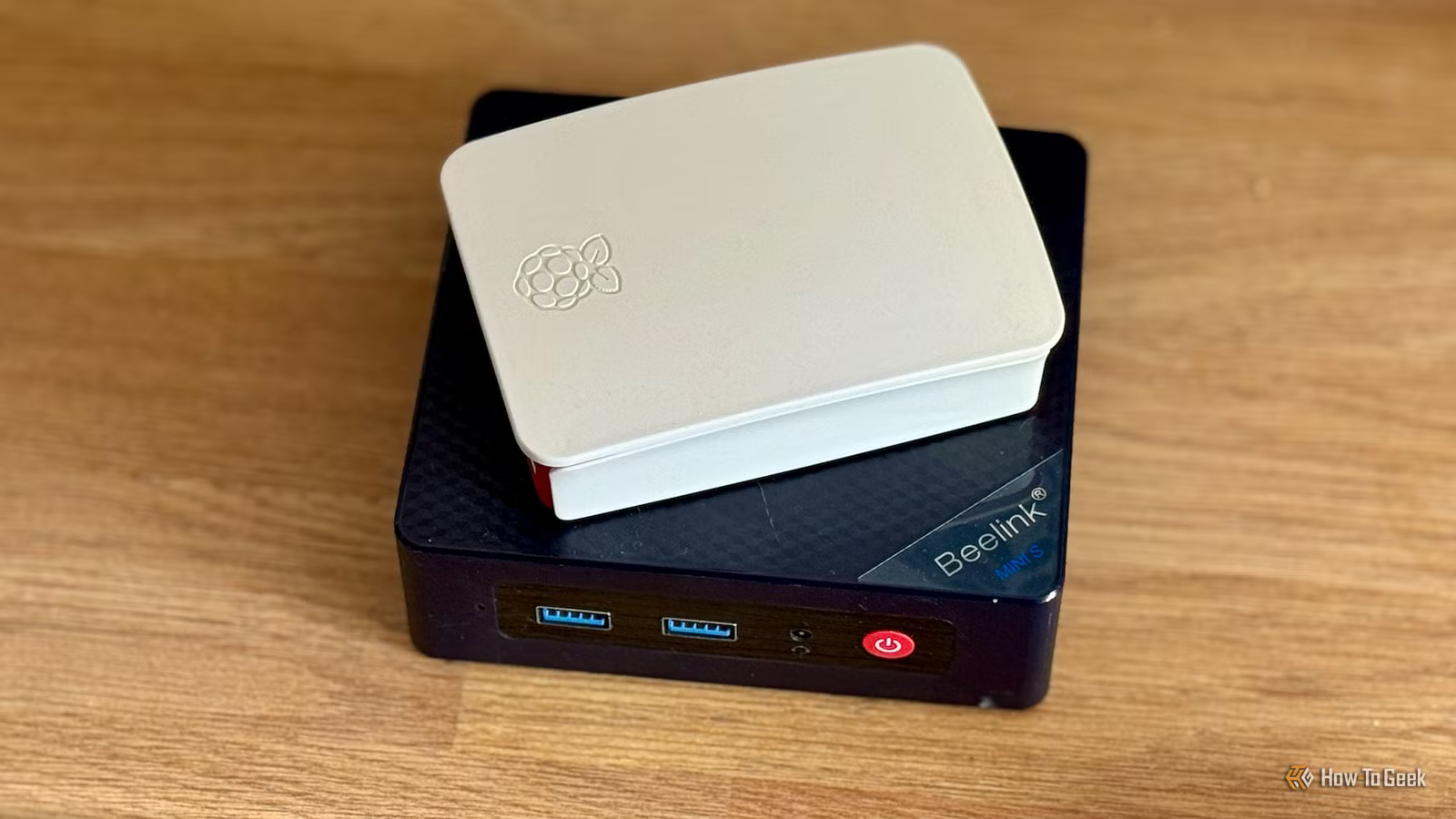
For a long time, a Raspberry Pi was a common suggestion for people looking to set up their first Home Assistant server. While it wasn’t perfect, it was good enough for many setups. Sadly, the Raspberry Pi is no longer the bargain that it once was.
The Raspberry Pi used to be a popular Home Assistant server recommendation
The Pi was a great option for beginners
Credit: Adam Davidson/How-To Geek
Not so long ago, if you were to ask on Home Assistant forums what hardware would make a good first Home Assistant server, there was a good chance that someone would recommend a Raspberry Pi. The official Home Assistant installation guide still has the Raspberry Pi as one of the listed DIY options.
There are plenty of reasons why the Raspberry Pi used to make sense as a Home Assistant server. You could buy one for around $40, so it didn’t feel too painful to dedicate it to the single task of running your smart home. The power draw was low enough that it didn’t matter if you left it running 24/7, and there was a ton of community support if you ever hit any snags.
My first Home Assistant server was a Raspberry Pi 3B+, and it ran my smart home for several years with very few issues. Some Raspberry Pi users had issues with microSD cards failing due to data constantly being written to the card, but mine never hit that issue, and I eventually moved to using an external SSD instead of a microSD card.
Brand
Raspberry Pi
Storage
8GB
It’s only recommended for tech-savvy users, but the Raspberry Pi 5 is a tinkerer’s dream. Cheap, highly customizable, and with great onboard specs, it’s a solid base for your next mini PC.
The price of a Raspberry Pi has gone through the roof
Memory prices are mostly to blame
Credit: Raspberry Pi
Unfortunately, the Raspberry Pi is no longer the easy recommendation that it once was. It’s still a low-power device, and there’s plenty of community support if you need it. What’s changed is the price. The Raspberry Pi can no longer be considered a low-cost option.
The current retail prices are now much higher than the original launch prices. A 4GB Raspberry Pi 5, which is a reasonable baseline for a typical Home Assistant setup, is currently around $110, while the 8GB model, which can run heavy add-ons such as InfluxDB, is around $175. The 16GB model can cost more than $300, which sounds insane for a supposedly low-cost single-board computer.
You can opt for a model with less RAM, with the 2GB model costing around $65 and the 1GB model around $45. However, Home Assistant’s own Raspberry Pi guide suggests 2GB as the minimum requirement, and even then, you may struggle to use add-ons such as ESPHome.
Related
RAM prices have doubled, here’s my plan to survive the ‘RAM-pocalypse’
Some of us have rather short memories…
These weren’t always the prices of the Raspberry Pi models. When the Raspberry Pi 5 first launched in 2023, the 4GB model cost around $60, and the 8GB model cost around $80, so the prices have essentially doubled.
There are several reasons why this is the case. The cost of RAM has skyrocketed as AI server demand has consumed much of the supply of memory, so it’s far more expensive to produce an 8GB Raspberry Pi than it used to be. Raspberry Pi Holdings also went public in June 2024, and now has to answer to shareholders who are expecting returns on their investments.
The full cost of a Raspberry Pi Home Assistant setup
You need more than just a Pi
Credit: Sydney Louw Butler/How-To Geek
If you want to set up a Home Assistant server, the Raspberry Pi isn’t all you’ll need. In practice, you’ll also want a case, a power supply, and an SSD rather than relying on a microSD card. You may also want to add a Zigbee dongle and active cooling, too. You can easily spend more than $200 even with a 4GB Raspberry Pi.
It’s not really accurate to call the Raspberry Pi a “low-cost” option for a Home Assistant server when you need to spend upward of $200 to run one. The reality is that there are better options for the same price, and alternative options that can do the job for far less.
Better options are available for the same money
You can get a lot more bang for your buck
A Raspberry Pi used to be a good choice for a Home Assistant server because it was cheap enough that it didn’t matter that you were only using it for one dedicated purpose. If you’re going to spend $200 or more, however, then you want a device that can do more.
A mini PC is a more sensible option. You can currently buy a Beelink Mini S12 for under $300 from some retailers and use it to run multiple services. For example, I use the Proxmox virtualization software on my mini PC and run a whole host of services, including Home Assistant, Pi-hole, Jellyfin, Uptime Kuma, n8n, budgeting software, and more.
If you’re not planning to run other services, you can get a Home Assistant Green for under $200. This is a dedicated Home Assistant server and is as close to a plug-and-play option for Home Assistant as you will find.
If you’re looking for a cheaper option, you can often find second-hand small form factor (SFF) PCs such as Dell Optiplex on sites such as Facebook Marketplace for under $100. These little powerhouses are great for running other services alongside Home Assistant, too.
The Raspberry Pi is no longer the affordable option
The reign of the Raspberry Pi as the Home Assistant server hardware of choice is sadly coming to an end. At current prices, it no longer makes financial sense. Your best bet is to consider something else.
