

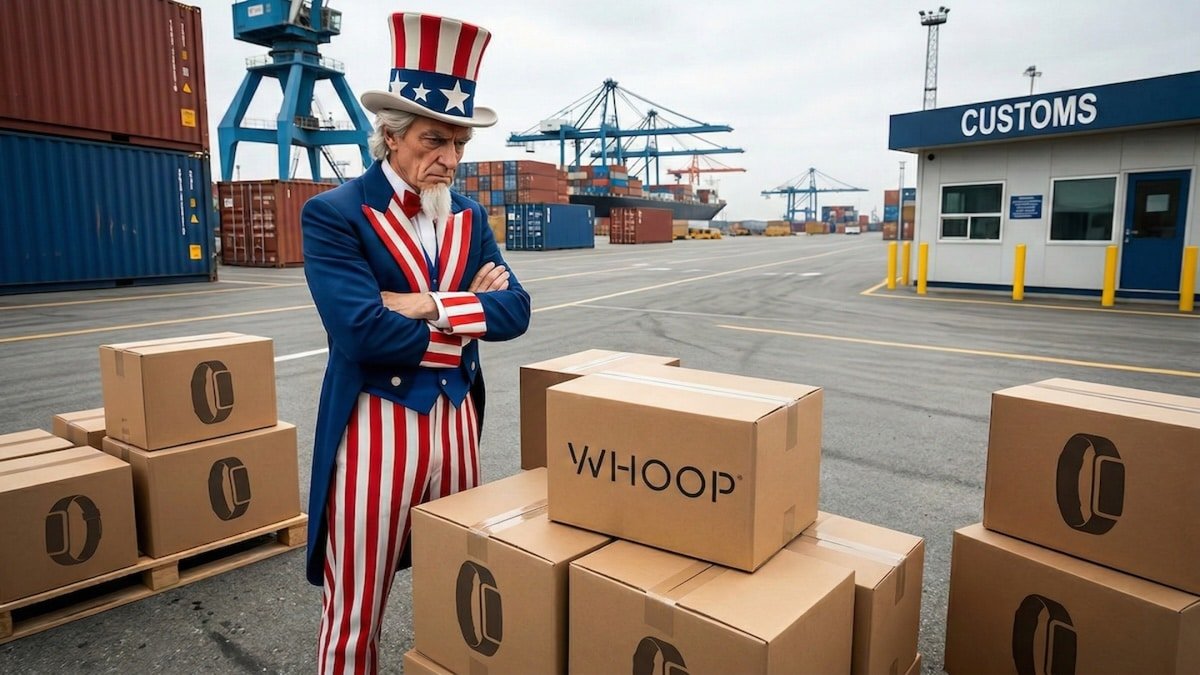
Whoop has taken its dispute with the US government to the Court of International Trade, with the case appearing on the docket on February 24th. The move puts the fitness wearable company in the middle of a widening legal fight over how certain import duties were applied and collected.
The case appears in court records as Whoop Inc v United States. Yes, the defendant is the US government itself, which is standard procedure in these filings. Companies do not sue Customs and Border Protection directly in this court. They take on the government over how duties were assessed or collected on their imported goods.
The timing of the filing is telling
The timing is not coincidental. Over recent weeks, hundreds of importers have filed similar cases in the same court, following a Supreme Court decision that narrowed the executive branch’s authority to impose broad import tariffs under emergency powers. That ruling did not automatically trigger refunds. What it did was open the door for companies to return to the trade court and make the case that duties they had already paid no longer had a valid legal basis.
Whoop’s filing lands right inside that window, which strongly suggests the company believes at least some of the import duties it paid on hardware fall under the scope of that ruling.
Trade court cases like this usually come down to whether specific goods should have been subject to particular tariff rates at all, rather than a broader argument about trade policy. In many of the recent challenges, the disputed duties sit in the 10 to 25 percent range, which for consumer electronics can quickly turn into a serious cost once volumes add up.
The complaint text has not yet been made publicly available through summary docket services. So we could not confirm the specific figures around tariff rates, product classifications or dollar amounts.
That context matters for Whoop. Hardware is the gateway into its subscription model, so any import duty applied at the border hits margins immediately, even if most long term revenue comes from memberships rather than device sales.
If the case goes Whoop’s way, the most likely outcome would be a refund of duties already paid, not a rewrite of future tariff rules. These cases look backward by design, even if their outcomes influence how companies plan imports going forward. The government has until late April to file its initial response.
Worth keeping an eye on
Whoop is not going it alone. Big and small electronics importers are lining up with similar cases, some as part of coordinated group actions and others, like Whoop, by filing their own complaints based on their individual import records.
The trade court is likely to be busy for a while. A steady run of decisions over the next few months should make it clearer which tariffs actually fall under the Supreme Court ruling and how refunds are supposed to work. Whatever comes out of that process will ripple well beyond wearables.
This article originally appeared on Gadgets & Wearables, the first media outlet to report the story.
Sources: Justia, CBP
Subscribe to our monthly newsletter! Check out our YouTube channel.
And of course, you can follow Gadgets & Wearables on Google News and add us as a preferred source to get our expert news, reviews, and opinion in your feeds.
