

I’ve been using ChatGPT for a long time, but I only recently switched to a Claude Pro subscription, which costs just under $20 a month. I’ve now spent a couple of months with it, and I can honestly say it feels worth the price. It’s one of those tools where, once it fits into your workflow, you don’t really question the subscription anymore — you just keep using it.
That said, my first few days with it were far from perfect. I approached it like any other tool I was casually testing, without really understanding how to get the best out of it. And that’s usually where most people miss out. If you’re even slightly considering switching or adding another AI tool to your stack, there are a few things I’d strongly suggest setting up and trying early on. Otherwise, you’ll probably end up doing what I did — realizing later that you weren’t really using it to its full potential in the beginning.
Related
This Is the Best ChatGPT Alternative, but It’s Still Missing These Features
Claude is better than its competitors, but some basic changes would take it to the next level.
This way, Claude will start remembering you
It turns all your chats into ongoing conversations
Shimul Sood / MakeUseOf
One of the first things I’d recommend setting up with Claude is its ability to build memory from your chat history. It completely changes how the tool behaves over time.
When this is turned on, Claude doesn’t treat every chat like a blank slate. Instead, it slowly starts picking up patterns — your tone, your recurring tasks, how you structure requests, even the kinds of work you usually come back to. So if you’re using it daily for things like brainstorming ideas, digging into research, or automating workflows, it gradually stops needing full explanations every single time.
For example, I often use Claude to set up repeatable automation-style prompts. At first, I had to explain everything from scratch. But after a while, once memory kicked in, it began to recognize the structure I prefer. So when I ask for something similar again, I don’t have to rebuild the entire context — it already gets the direction we were going in. It removes a lot of that repetitive back-and-forth where you keep re-explaining the same thing to an AI. To turn it on, follow these steps:
- Open the Claude app on your phone or desktop.
- Go to your profile section and open Settings.
- In the left-hand menu, click on Capabilities.
- Under the Memory section, enable Generate memory from chat history.
That’s basically it. Once it’s on, Claude starts adapting to how you work without having to constantly remind it of the context.
Naturally, there’s always a bit of hesitation when it comes to privacy and data use. A safer, more practical approach is to let Claude focus solely on your work-related context, not anything personal.
Turning your phone into a remote brain for your PC
Send the command from anywhere, and watch your computer do the work
Shimul Sood / MakeUseOf
You can actually use your phone like a remote control for your PC with Claude, and it feels a bit like sending instructions over a live connection between two devices.
You’re not just chatting with AI anymore. You can assign tasks from your phone and have them executed on your home computer. So if you want Claude to open an app on your PC, run a workflow, or even help someone at home quickly search for something on YouTube, you can just dispatch the request from your phone and let it handle the rest through your connected setup.
Of course, this only works if your PC is turned on and the relevant apps or services are already connected to Claude. Once that’s in place, your phone becomes a control panel for what’s happening on your computer.
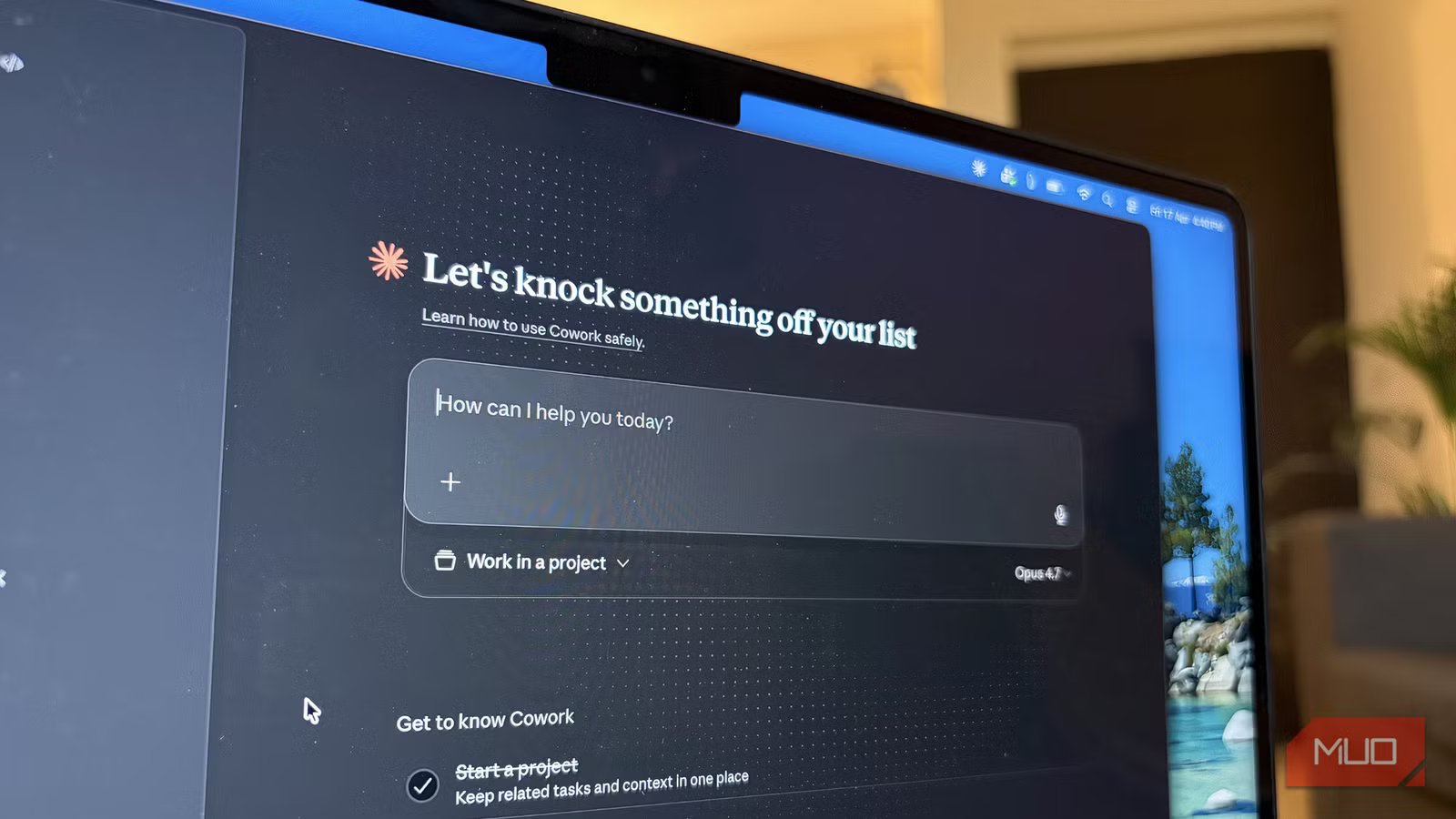
Honestly, when I first came across this, I had no clue it could do something like this. And once you start using it, it becomes a natural extension of how you work across devices. To enable this feature, open the Settings tab in Claude, go to Cowork, and enable Dispatch.
Related
ChatGPT Is Getting Old: Try This Ultra-Smart AI Alternative Instead
If you’re bored with ChatGPT or want to try something new, Claude is the answer.
Claude can learn how you like things done
Tell it once, and you can stop repeating yourself forever
Using Claude well is not just about asking better questions; it is also about teaching it how you want things done. If you set up your profile properly, the entire experience becomes much smoother. Instead of giving generic, one-size-fits-all answers every time, Claude starts tailoring its responses to your preferences.
For instance, I have added clear instructions in the settings about how I want research and explanations handled, especially keeping them short, focused, and straight to the point. Once this is set, you do not have to keep correcting or repeating yourself in every new chat. It follows your preferred style in the background, making interactions feel more consistent and far less messy. Over time, it starts feeling like you are working with someone who actually understands your way of thinking. To set it up, go to Settings in the Claude app, then open General, and add all your instructions in the Instructions tab.
Developer
Anthropic PBC
Price model
Free, subscription available
Claude is an advanced artificial intelligence assistant developed by Anthropic. Built on Constitutional AI principles, it excels at complex reasoning, sophisticated writing, and professional-grade coding assistance.
Once it starts getting you, there’s no going back
To be honest, if I had known all this when I first started using Claude, I would have set everything up much earlier and saved myself a lot of trial and error. But that is just how it goes; you figure things out as you use the tool. What matters now is that these small setups make a big difference in how smoothly everything runs. I am still refining my workflow and finding new ways to get more out of it, but even these basic changes alone have already improved the experience significantly. If you are using Claude regularly, it is worth taking a little time to set these things up properly.
