

A contact sensor is a handy little device that can signal you if something is opened or closed, like a door or a window. It’s a useful theft deterrent to use alongside a security system, not to mention preventing your rebellious teens from sneaking out of their bedroom windows like they did in movies from the ’90s.
Communicating with a smart home hub and/or app, contact sensors are most commonly used for security. But there are other ways and places you can use them if you really want to get creative that have nothing to do with security.
Related
I finally feel safe at home thanks to these 3 smart security gadgets
It’s like hiring a security guard to roam around my home.
Pipes or other water openings
Stop leaks and plumbing troubles
Credit: Christine Persaud / MUO
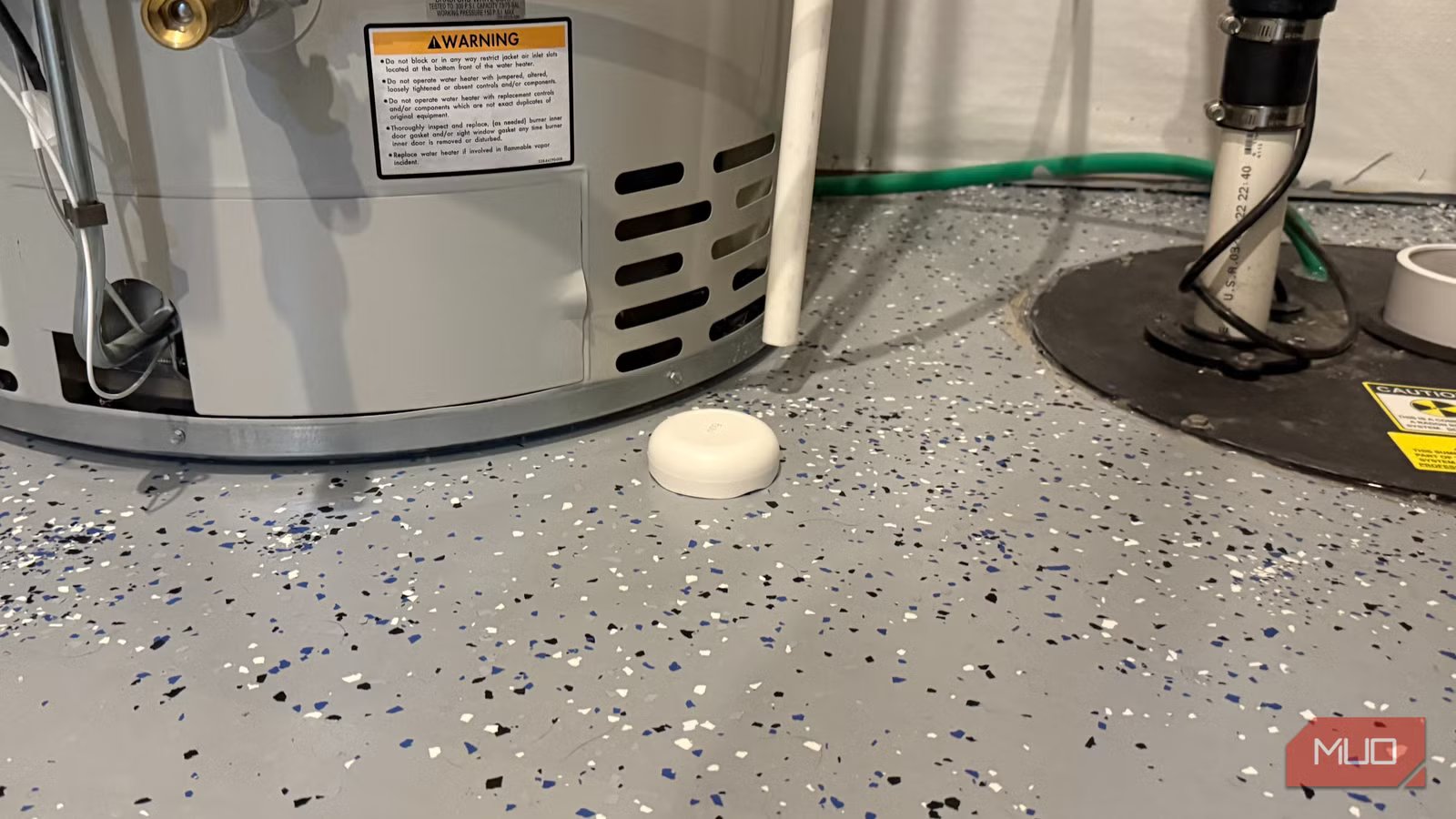
Ideally, you should use a contact sensor that is specifically a water leak sensor for a place where there’s moisture, like your kitchen pipes, laundry area, or sewer drain. These are usually two pieces with a main unit you plug in and a second sensor you place in a spot where water will pool if there’s a leak. Using this can help you nip an issue in the bud before a few drops becomes a huge swimming pool in your basement, kitchen, or bathroom.
While you might find ways to fashion a door contact sensor around a pipe to detect movement, a water leak contact sensor is designed specifically for this purpose. They are usually sold in packs so you can place them all around the house where leaks are common. Think behind the toilet, under the kitchen and bathroom sink, beside the washing machine, behind the refrigerator, or be a basement sewer drain that can back up. It can be the difference between costly repairs and tackling a small issue before it becomes a huge problem.
sensor
Outdoor shed
A different kind of door
OK, so shed doors are still technically doors. But they’re doors you might not consider using contact sensors on. If you live somewhere with a temperature that fluctuates in a big way between seasons, even within seasons, you may find that your shed doors shift as the ground underneath does. This can cause the doors to pop open. I live where there can be especially cold winters and this often happens with the shed in my backyard, even though it’s on a concrete slab. If the door isn’t latched properly and there are heavy winds, it can fly open, too.
A contact sensor can alert you if it’s open so you can close it right away to prevent raccoons or other critters from getting inside. It can also be useful to protect the items inside from exposure to inclement weather. Yes, this is useful for security, too.
Pantry doors
Stop the stolen cookies
Credit: Christine Persaud / MUO
On a diet or have kids with a sweet tooth? Place a contact sensor on pantry doors so you know when they’re opened. There’s no more blame game or denial about whole stole the cookies from the cookie jar. You’ll be alerted if the cupboards are open after school when latchkey kids are home on their own, for example, to call and remind them not to ruin their dinners. If you want to use this as a personal part of your own diet or health plan, have it such that your partner or even friends know whenever the pantry with treats is opened. It adds a level of accountability to your nutritional journey.
Whether it’s to stop your kids from eating too much candy or squash your late-night snacking, it’s a good way to keep track. If the companion app stores a history of opens and closes, you can also look back to see how often or when you or someone else opens the pantry and use the data to make positive nutritional changes. It’s worth noting that if you’re like me and despise when family members leave the cupboard doors open, the sensor notifications can be a reminder for them to close the cabinets!
Paired with smart home control
Lights, cameras, cooling
A contact sensor is among the best under-the-radar upgrades for your smart home. Set the contact sensor up as part of your overall smart home so that the lights turn on whenever the front door is opened, or the air conditioning turns off when a window is opened. You can do this by adding the contact sensor activity as part of a scene, such that when one action occurs, another happens.
It could be something even simpler, like the smart coffee machine turns on and starts brewing when you open the cupboard with the coffee cups, or romantic lighting and music turn on when you open the wine cabinet. Get creative by making contact sensors part of your smart home.
They go beyond just doors
Credit: Jonathon Jachura / MUO
You might look at contact sensors and think of the most obvious application for them. But they can be used for so much more, whether it’s a cheap motion sensor or a premium one. From being part of smart home scenes to helping you monitor snacks and unhealthy food intake, preventing damage from water leaks, and securing outdoor items, when you buy a multipack, consider using some of them for areas other than doors and windows. Try a few different spots and setups and see what works best for you.
