

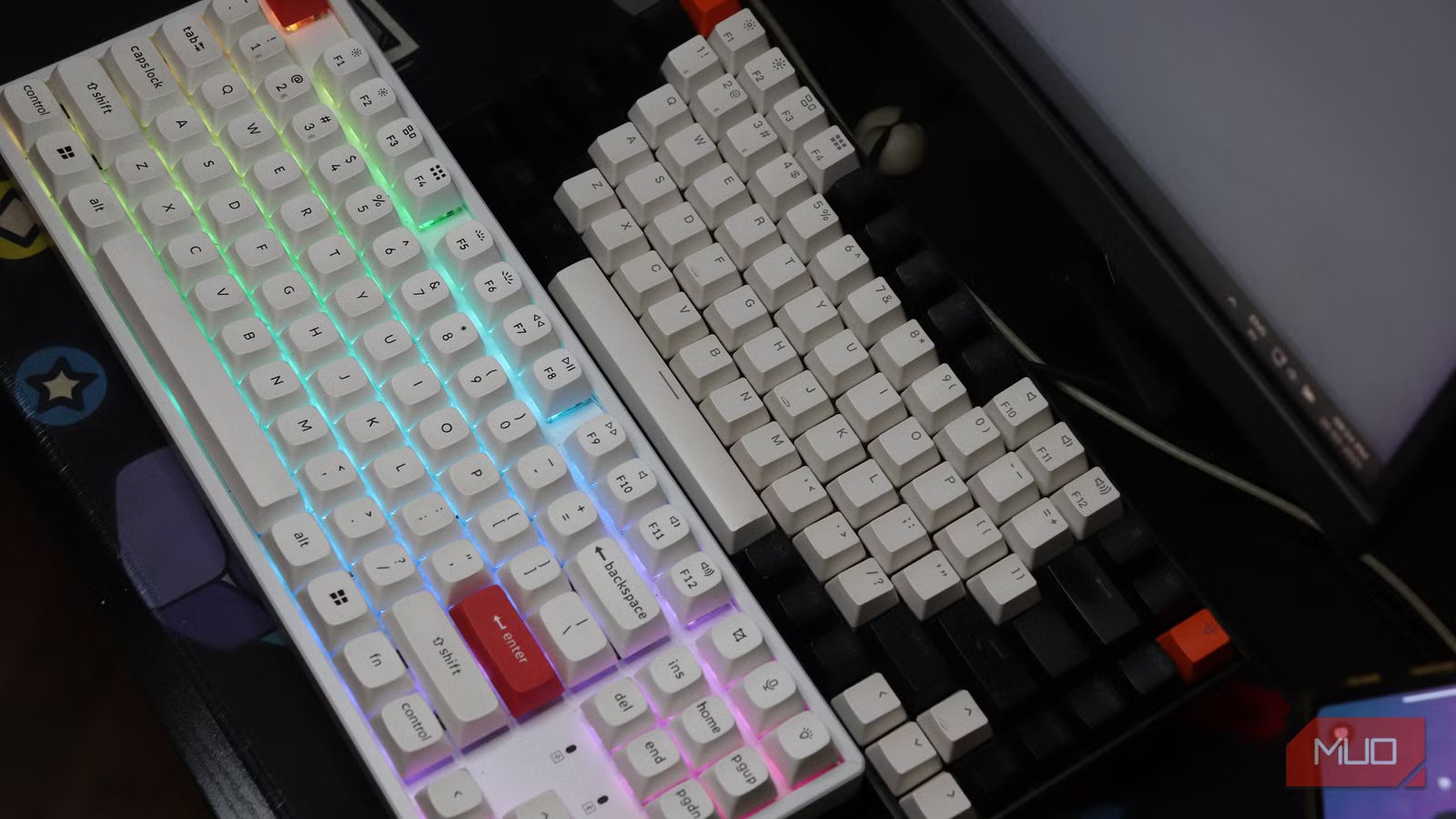
If you’ve been using Windows for any amount of time, you already know basic keyboard shortcuts that we use daily. They might speed up copying and pasting text and files, but Windows is hiding an entire arsenal of keyboard shortcuts that most people never discover. And once you start using them, going back feels physically painful.
From keyboard shortcuts that work in almost every app to ones that reset entire driver stacks, Windows has a lot of time-saving tricks up its sleeve. They replace so many clicks that it’ll almost feel like cheating once you start using them.
You’re underusing Windows’ built-in clipboard history
Stop copying one thing at a time—Windows can remember everything you copy.
Yadullah Abidi / MakeUseOfCredit: Yadullah Abidi / MakeUseOf
Probably the simplest shortcut that you need to start using, if you don’t already, is clipboard history, accessible by pressing Windows key + V. When you press the shortcut, you get a scrollable panel showing everything you’ve copied up to the last 25 items, including text, code, and images. You can also use it to quickly access emojis, GIFs, and other symbols.
The clipboard history resets when you reboot or when you press the clear button inside the window. However, you can pin frequently used blocks of text (or images) so they survive a restart. You do need to enable it the first time before using it, though. Just follow these steps:
- Open Windows Settings and head to the System tab.
- Scroll down and click Clipboard.
- Enable the Clipboard history slider.
Once enabled, you can access your clipboard history anytime using the aforementioned keyboard shortcut. Most people never turn on clipboard history on Windows, but once you do, it’s hard to go back.
The screenshot shortcut you should be using
Capture exactly what you need without opening any screenshot apps.
Yadullah Abidi / MakeUseOfCredit: Yadullah Abidi / MakeUseOf
If you’re still hitting the Print Screen key to take screenshots on Windows 11, you’re doing it wrong. In case you didn’t know, Windows 11 comes with the Snipping Tool built in by default, which you can access by pressing Windows key + Shift + S.
The keyboard shortcut opens the Snipping Tool overlay instantly and lets you draw a rectangle, select a freeform shape, grab a specific window, or capture the entire screen. It even has a color picker and text extraction tool that uses OCR (Optical Character Recognition) to copy text from places you wouldn’t otherwise be able to.
Once the capture is taken, it goes straight to your clipboard—meaning you can paste it directly into any other program or text field, without having to save it first using Paint or another image editor. It even includes a built-in screen recorder that is so good you won’t need another.
Snap windows like you’re using a tiling window manager
Arrange multiple apps instantly without dragging windows around
Image taken by Yadullah Abidi | No attribution required.
Window management on Windows used to be a chore, but Snap Layouts changed it for good. However, they still require dragging your cursor all the way to the window button in the top right, waiting for the panel to appear, and then snapping the window. Thankfully, there’s a faster way. Just press Windows key + Z on any open window, and a layout menu will appear with numbered options. Pick a layout, and Windows arranges everything else for you.
If you want to quickly snap just a couple of windows, using the Windows key + Arrow key shortcut will snap your active window to the left, right, top, or bottom of your display. Pressing Windows key + Shift + Arrow key will move windows to any monitors in the arrow keys’ direction in case you have a multi-monitor setup. It’s not quite a tiling window manager, but it gets close and does the job well. Once you get used to organizing your windows this way, dragging your mouse starts feeling painfully slow.
The emergency graphics fix no one told you about
Fix frozen screens and GPU glitches with one quick keyboard combo
Yadullah Abidi / MakeUseOfCredit: Yadullah Abidi / MakeUseOf
If your screen freezes, goes black, or starts flickering, your first instinct would be to open the settings app, control panel, or your GPU’s manufacturer utility to diagnose and fix the issue. But there’s a far easier option available. Just press Windows key + Shift + Ctrl + B.
This four-key combination will restart your graphics driver without rebooting your PC. Your screen will flash or go dark for a second, and you might hear a brief beep, but everything will come back to normal. Your open apps and unsaved work stay exactly where they were. You’ll use this one rarely, but when you do, it feels like an absolute superpower.
Stop typing and start dictating instead
Windows has a surprisingly good voice typing tool built right in.
Image taken by Yadullah Abidi | No attribution required.
Windows’ dictation capabilities have silently been on the rise, and they’re now good enough that you should start using them. You can summon the built-in dictation tool using Windows key + H. Press the shortcut with any text field selected—text editor, browser, or any other field—and a small microphone toolbar will appear. Once it does, start talking, and Windows will transcribe your speech in real time, complete with automatic punctuation.
This works better on laptops than on desktops, since laptops often have built-in microphones, which you’ll need for this. Transcription quality can also depend on your mic quality and your surroundings, so this isn’t a feature you’ll use everywhere. But for a quick email or jotting down notes when your hands are busy, it’s shockingly good.
Peek at your desktop without minimizing anything
Quickly check your desktop while keeping all your windows exactly where they are.
Image taken by Yadullah Abidi | No attribution required.
The Windows key + D keyboard shortcut is already quite popular. It minimizes everything to show the desktop. But once you’re on your desktop, you have to reopen your windows one at a time. Thankfully, Windows offers a less destructive way to quickly peek at your desktop using the Windows key + Comma shortcut.
As soon as you press the shortcut, all your windows will become transparent to show your desktop, even if you have multiple monitors. Once you let go of the shortcut, your windows will reappear where you left them. Keep in mind that the exact way this function behaves and the animations that fade the windows in and out can vary between Windows versions, but the core functionality remains the same.
These Windows shortcuts exist for a reason; use them
Windows is a graphic-heavy OS, meaning there are buttons you can click and windows you can drag anywhere to do certain tasks. The mouse is, without a doubt, one of the most essential computer accessories, but you’d get more done without it. And that’s where keyboard shortcuts like these come in handy.
Related
These 8 keyboard shortcuts are disastrous to hit by mistake
Hit these when you don’t mean to, and everything will go crazy.
These shortcuts aren’t buried in some obscure settings menu or locked behind a registry hack. They’re right there on your keyboard, baked into the OS you already use daily. Start using them, and you’ll instantly notice the difference they make.
