

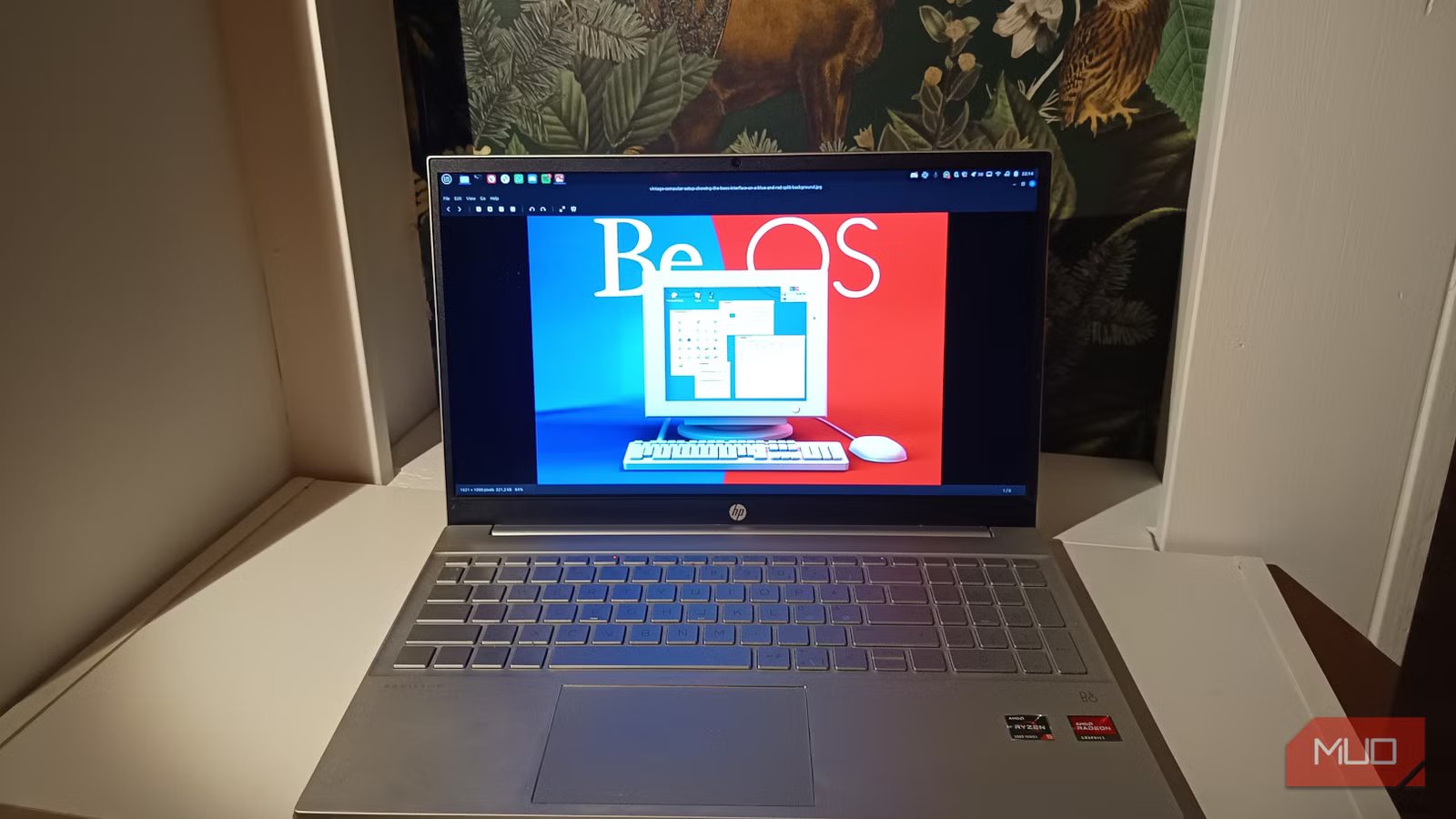
In 1995, Windows was everywhere. It was also, let’s be kind, a little fragile. You didn’t use Windows back then so much as you negotiated with it. Multitasking worked until it didn’t. Audio sometimes behaved. And every now and then, the whole system would just stop and stare into the void for a few seconds, like it needed a break. We accepted it because that was normal.
And then there was BeOS. This weird, almost suspiciously smooth operating system didn’t seem to have those problems at all. It didn’t crash in the same way. It didn’t freeze when you pushed it. It didn’t feel like it was constantly one step behind you. It just … worked. And almost nobody noticed.
BeOS was built for speed, not history
No baggage, no excuses
Most operating systems are shaped by their past. Old decisions, old hardware, old compromises that just keep sticking around. BeOS didn’t have that problem. It showed up fresh. No legacy chains dragging behind it. No, “we have to support this thing from 1987, or everything breaks.” Which meant it could focus on something very simple: how the system felt. And that’s the part people forget. Not benchmarks, not specs, but the feeling.
Click something. It opens instantly. Move a window, and it actually follows your mouse instead of lagging half a second behind, like it’s reconsidering your request. There’s no hesitation. No micro-delays you subconsciously learn to live with. It feels … direct. Like the computer is keeping up with you, instead of asking you to slow down.
No drama, no freezes, no “why did that break?”
Digvijay Kumar / MakeUseOfCredit: Digvijay Kumar / MakeUseOf
If you used a computer in the 90s, you remember this: You start copying a file, then you open something else. Maybe play audio in the background. And suddenly everything just stops. The mouse still kind of moves, but nothing responds. You wait, you sigh, and then consider your life choices. BeOS didn’t do that. Things just kept going. Not in a “technically it’s multitasking” kind of way. In a very literal, very noticeable way. The system stayed responsive even when it had actual work to do.
That’s because everything was threaded. Not just apps, but pieces of apps. The UI wasn’t stuck waiting for background tasks to finish. So nothing held the rest of the system hostage. And then there’s the media side of things. Most operating systems treated audio and video like something they’d figure out later. BeOS didn’t. It was built for it. You could play audio, mess with files, open apps, and it didn’t fall apart. No crackling. No weird slowdowns. No “don’t touch anything while this is happening” moments.
And for extra fun, it handled multiple CPUs properly. In the 90s. When most systems barely knew what to do with one. BeOS just used whatever hardware you gave it without making a big deal out of it. Which, honestly, might be the most impressive part. It didn’t feel advanced. It just felt … normal. That’s how far ahead it was.
The file system was weird in the best way
Searching actually made sense for once
Let’s talk about files for a second. Because most of us still deal with them as if it were 1995. Folders, subfolders, and that one directory where everything goes to die. And somewhere in there is the file you need, probably named something helpful like “final_final_REAL_v2”. BeOS looked at that mess and just … didn’t accept it. Its file system treated files more like data than objects. Everything had metadata. Everything was indexed. And the system actually used it.
So instead of digging, you could just search. Not in a “type something and hope” way, but in a “this updates live as things change” way. That part still feels a bit ridiculous. You run a query, and as files are added or modified, the results just update. No refresh, or rerun. It’s subtle, but once you notice it, you start wondering why we ever settled for anything else.
BeOS didn’t lose because it was worse
It lost because the world didn’t make space for it
This is where it gets annoying. BeOS didn’t fail in the way bad products fail. It didn’t collapse under its own weight. It didn’t ship broken. It didn’t confuse users. It just didn’t have the backing, enough hardware support, or enough developers building for it. No strong foothold with manufacturers. And Microsoft was already sitting on the entire market like a dragon on gold.
So even if BeOS was better in some ways, it didn’t matter if people couldn’t easily get it or run the software they needed. And then there’s the Apple moment. Apple almost bought Be. Imagine that timeline for a second. They didn’t end up buying it and went with NeXT instead, and that became macOS. Which is great, sure, but it also means BeOS never got that second chance. After that, it was basically over. Not dramatically, not even all at once. Just slowly fading out while everything else kept moving.
We’re still catching up to what BeOS got right
Here’s the uncomfortable part. A lot of what made BeOS feel special back then still isn’t consistently solved today. We have faster hardware, way more power, and systems that can do ridiculous things on paper. And yet you still get those moments. The slight delay, the random hiccup, and the “why is this taking a second?” feeling that you’ve learned to ignore. BeOS didn’t have that same friction.
Related
Ancient Linux distros you don’t remember anymore
I’m not here to make you feel old, but…
It focused on making the system feel immediate. Not overloaded with features, or endlessly flexible, but responsive. And that sounds like a small thing until you realize how much of your daily computing experience depends on it. There’s an open-source project called Haiku that’s still carrying that idea forward. It’s not mainstream, but it exists. Like a quiet reminder that this approach worked. And it still works. BeOS didn’t die because it was behind. It died because everything else was easier to ship, sell, and standardize.
But if you actually look at what it did … It wasn’t outdated. It was just early. And maybe a little too right for its own time.
