

When you’re consumed by a hobby, it’s normal to want to spend some money on it. But what if you’re spending your money on the wrong thing? And what if you bought something else that both kickstarts a new hobby and augments your existing pastimes?
Here are some purchases to consider that can do both.
A 3D printer
Print all of the things
Credit: Tim Brookes / How-To Geek
A 3D printer might be the ultimate purchase for the keen hobbyist. As you might expect from a machine that can be used to fabricate entirely new items, the applications are (almost) limitless. Not only can you download models that other people have made and shared, but you can also hone your design skills and create your own custom models to print.
There’s a whole range of photography accessories you can 3D print, including lens filter adapters, rigs and attachments, clips, and storage systems, to name a few. Gamers can print PC mods like GPU supports or whole shells for ultralight mice, plus useful models for hanging headphones and storing controllers.
While a lot of wargaming and miniatures enthusiasts prefer resin printers, there’s a whole community dedicated to creating high-quality miniatures with a standard FDM (filament) printer in the form of r/FDMminiatures. Though I had mixed results printing LEGO bricks, with the right settings and a bit of practice, you can expand what sets are capable of and print hard-to-find pieces or lengths of track for LEGO railways. Even if you’re into hands-on things like woodworking, it’s amazing how useful a printer can be in making jigs, helping you organize your workshop, or even augmenting your power tools.
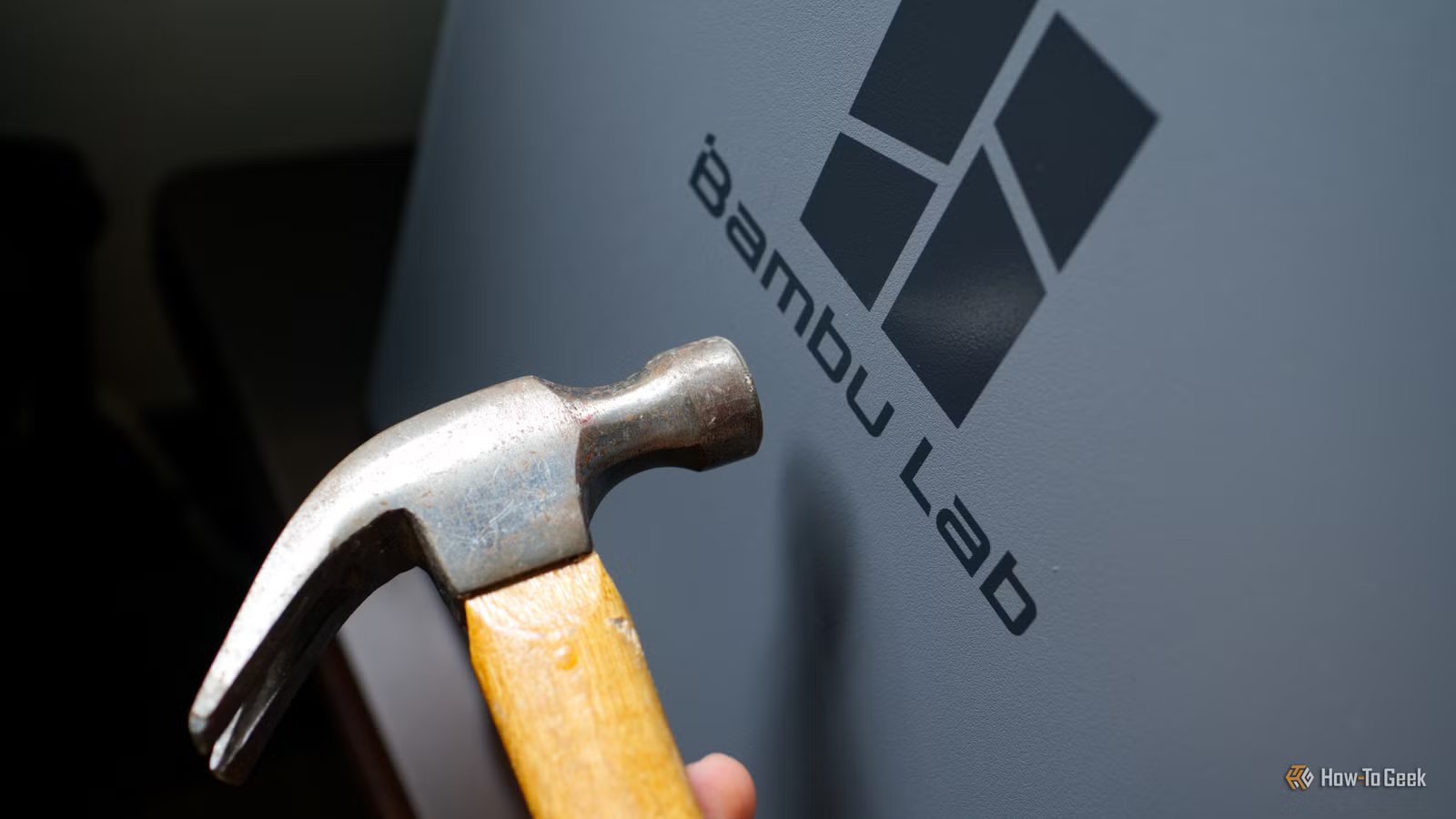
Take a look at a model repository MakerWorld or Printables to see what models others have shared that specifically relate to your hobby and the equipment you use. If you’re looking for a good starting point, consider a Bambu Lab printer for ease of use.
Build Volume
180x180x180
Printing Speed
500mm/s
The Bambu Lab A1 mini 3D printer is ready to go out of the box and can have you printing within 30 minutes. Offering full-auto calibration, this compact 3D printer features a 180mm build volume and is compatible with the AMS Lite for multi-color printing. It also features built-in vibration and flow-rate calibration, which are typically features only found on more premium printers.
Build Volume
256x256x256mm
Printing Speed
600mm/s
The Bambu Labs P2S 3D printer is ready to go out of the box and can have you printing within 15 minutes. It features up to 20-color printing with the AMS unit, has an upgraded built-in camera for remote monitoring and time lapses, and has an enclosed body for printing even high-temperature filament.
A cheap second-hand mini PC
It’s time to set up a homelab
Credit: Patrick Campanale / How-To Geek
A homelab consists of at least one server that runs a whole range of services on your local network. While setting up a server sounds like a lot of work, that’s not the case. The barrier to entry is so low that it makes little sense for most people to spend big on high-end equipment (especially when starting out), so a second-hand mini PC is the best place to start.
Mini PCs are the perfect starting point for a home server. They’re more powerful than single-board computers like the Raspberry Pi, they don’t rely on an SD card for storage, they’re small enough to fit wherever you like, and they include a good range of ports, including Ethernet for rock-solid networking and USB for storage expansion. They also happen to be cheap, especially on the second-hand market.
If you’re a photographer, you can use a service like immich to host your collection. If you’re always looking for deals on specific items, you can host Change Detection to watch websites for price drops and stock notification. You can use your mini PC to host Minecraft servers. You can move your gaming crew to Discourse, a self-hosted Discord alternative.
You can also pick whatever ecosystem you like. You can leave Windows on a server and run everything through Docker, install your preferred Linux flavor and do the same, or grab a Mac mini and have a homelab that slots in neatly with your other Apple devices.
A NAS drive
Room to grow
Credit: Patrick Campanale / How-To Geek
A network-attached storage (NAS) drive provides a pool of space you can easily access on your local network. With a little work, you can set up a reverse proxy or VPN to make it accessible outside of your home, too. There are two main ways you can go about getting your hands on a NAS.
The first is to buy a ready-made solution, with drive bays that you can fill and an operating system that makes things relatively easy. The other is to build your own NAS, which is essentially a computer dedicated purely to storage. A pre-built NAS is the easy option, but you’ll pay more for it. Building your own takes a lot more planning and work, but you could save a lot of money (which means more storage for the same price as a pre-built).
Whichever path you choose, the end result is hugely beneficial for hobbies like photography, videography, music production, and maintaining collections of movies, games, or music. Knowing you can go out and fill a 128GB SD card or build a robust library of samples that is easy to access from any device on your network removes a barrier that can prevent you from doing what you love.
A Raspberry Pi (or similar)
The brain of your next project
Credit: Corbin Davenport / How-To Geek
The Raspberry Pi can be used in a homelab or as the brains of a NAS, but there are better options for those. What a Raspberry Pi really excels at is projects, particularly given that this single-board computer can quickly adapt to a task by swapping out or flashing an SD card.
The Raspberry Pi is a computer for makers who need a capable “brain” for their next project. This could be a time-consuming endeavor like building an arcade cabinet or rolling your own smart home dashboard. It could be a baby monitor that you build yourself, a media library you can travel with, a stock ticker for your office, or an ADS-B flight traffic monitor.
The Raspberry Pi is versatile, so you can use it time and time again to do different things. You can keep a small collection of microSD cards, ready to go, whenever you need a travel router, media streamer, or whatever it is you’re working on this week. Alternatively, you can assemble a small army of Raspberry Pi models.
Brand
Raspberry Pi
Storage
8GB
It’s only recommended for tech-savvy users, but the Raspberry Pi 5 is a tinkerer’s dream. Cheap, highly customizable, and with great onboard specs, it’s a solid base for your next mini PC.
ESP32 and similar microcontrollers
Build your own sensors and controllers
Credit: Patrick Campanale / How-To Geek
If you’re a smart home enthusiast who has yet to venture down the ESP32 rabbit hole, hold on to your hat. This tiny, cheap, $5-ish microcontroller is perfect for creating your own smart home accessories like presence sensors, LED strip controllers, infrared transmitters, garage door openers, and much more.
You’ll need to hone your soldering skills, but you’ll be able to take on projects that solve real problems around the smart home. You can also combine an ESP32 with a 3D printer for some fun projects. These boards are so cheap that you might as well order a few at a time.
Some of the hobbies that can benefit from these purchases can even help reduce your screen time.
