

Why you can trust Android Central
Our expert reviewers spend hours testing and comparing products and services so you can choose the best for you. Find out more about how we test.
At a time when everything demands our attention, more companies are leaning into the idea that consumers might want something that we can mostly ignore. The Fitbit Air fits into a growing category of devices like the Oura Ring 4 and Whoop bands that aim to minimize their presence while monitoring everything in the background.
I’ve been testing the Fitbit Air for just over a week, and it’s easily becoming one of my favorite new wearables. It does all the health and fitness tracking that I want, but without the distraction of a display. And while some users may prefer the functionality of a device like the Pixel Watch 4, the Fitbit Air is perfect for anyone who doesn’t want a smartwatch weighing them down.
Today’s best Fitbit Air deals
Swipe to scroll horizontallyFitbit Air specs
Category
Fitbit Air
Battery
Up to 7 days
Connectivity
Bluetooth 5
Compatibility
Android, iOS
Sensors
Optical HRM, SpO2, skin temperature, accelerometer, gyroscope
Vibration
✅
Materials
Sensor: Recycled polycarbonate, PBT plastics
Band: Textile, stainless steel
Water resistance
Up to 50 meters
Dimensions (sensor)
34.9 x 17 x 8.3mm
Weight
Sensor: 5.2g
Sensor+band: 12g
Band size
Textile: 130-210mm
Silicone: 130-175mm, 165-210mm
Colors
Obsidian, Berry, Lavender, Fog, Special Edition Stephen Curry
As light as air
(Image credit: Derrek Lee / Android Central)
The Fitbit Air is the first Fitbit product since 2023, excluding the kid-focused Fitbit Ace LTE from a couple of years ago. Previously, the Fitbit Charge 6 was launched as a minimalist fitness tracker, sporting a small display and Google services, making it a decent alternative to a smartwatch. The Air takes that philosophy to the next level as a lightweight and affordable tracker.
Latest Videos From
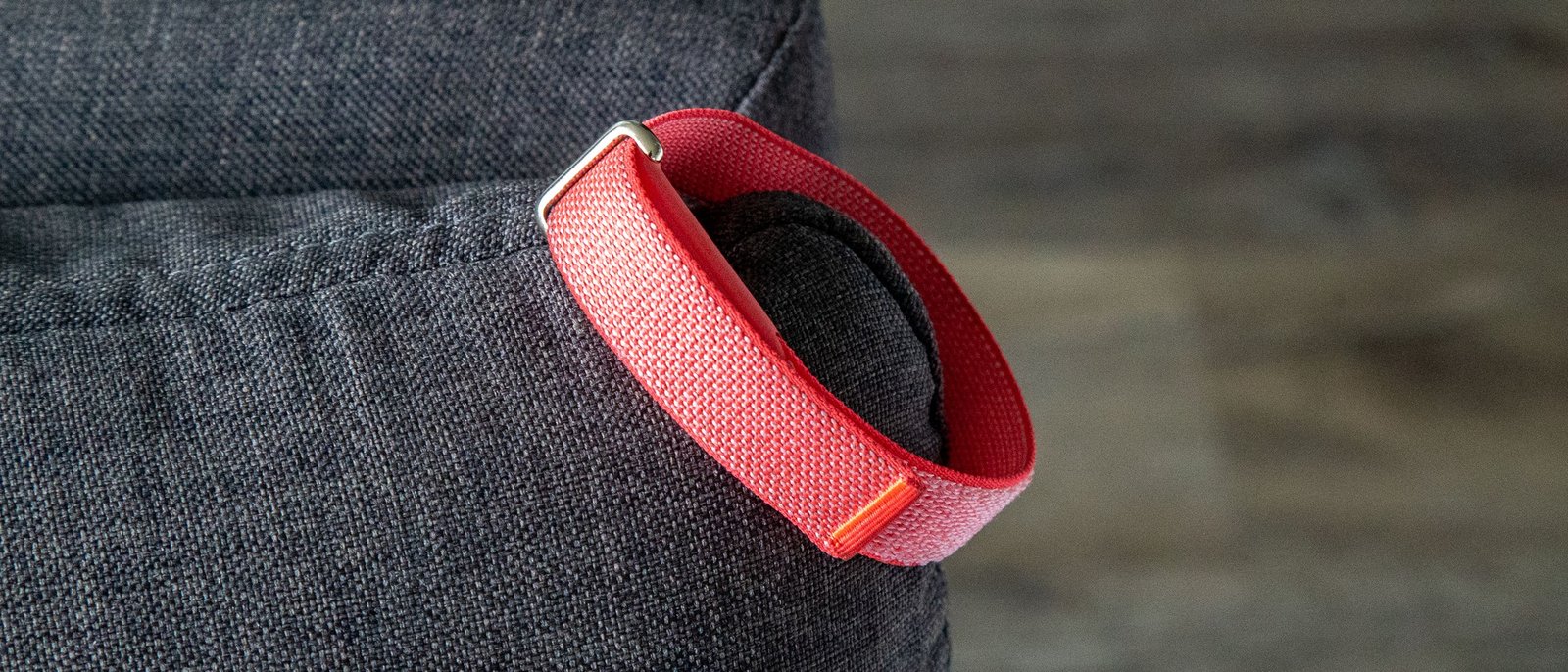
As soon as I put the Fitbit Air on my wrist, I was surprised by just how light it is. I’m used to wearing smartwatches like the Pixel Watch 4 and Garmin Venu 4, so this is practically nothing compared to them. The woven Performance Loop band that comes with it is thin and comfortable, and I often forget I’m even wearing it, which feels appropriate and a bit refreshing.
That said, the band is a little awkward to put on, as it secures above the wrist rather than below. I also notice that the vibrant Berry color option gets a bit dirty somewhat easily, and I haven’t been brave enough to wear it during workouts.
(Image credit: Derrek Lee / Android Central)
Before a workout, I normally pop out the actual tracker, which is a relatively small puck, and snap it into the Active band. Google makes it easy by placing a small marker on both the tracker and the band.
The Active band’s silicone design makes it ideal for heavy workouts, especially since many of my workouts are heated and I sweat a lot, although it’s a bit thicker than the Performance band. I also really like that it secures more like a transitional smartwatch band below the wrist.
Sleep like a baby, wake up refreshed
(Image credit: Derrek Lee / Android Central)
A benefit of the lightweight design is that the Fitbit Air is the perfect wearable to wear while sleeping. I, along with many others, find smartwatches uncomfortable to wear while sleeping, and it can be enough to wake me up in the middle of the night just to force one off my wrist. With the Fitbit Air, I’ve not had that problem, as it remains just as inconspicuous at night as it is during the day.
Sleep tracking on the Fitbit Air is as good as you’d expect, and as good as on devices like a Pixel Watch or even a Garmin smartwatch. It records sleep stages, sleep quality, and even restlessness or how much you moved while asleep. You get a sleep score, although Fitbit’s sleep animals aren’t supported with the new Google Health app, which is kind of a bummer.
(Image credit: Derrek Lee / Android Central)
Smart Wake is one of the Fitbit Air’s best features. I set up a few alarms, and the Air would wake me at an optimal time up to 30 minutes before my actual alarm time. And by “optimal time,” the band would determine if you’re in a lighter stage of sleep, which is generally better to wake you up without feeling groggy.
I use a low-level vibration that is subtle enough to wake me up without being startling, though a higher intensity is available. So far, I’ve had no problem waking up while wearing the Fitbit Air, and the lack of an alarm sound is the best part, as that can be the most jarring part of a smartwatch or smart display. To dismiss the vibration, simply double-tap the top of the sensor; otherwise, it will repeat after nine minutes.
Your phone is the only screen you interact with
(Image credit: Derrek Lee / Android Central)
Of course, without a display, you’ll need a way to view the Fitbit Air’s data. The new Google Health app, which arose from the ashes of the Fitbit app, is the main point of interaction for the Air, unlike a Pixel Watch, which requires its own separate app.
Setup is actually pretty easy; as soon as I put the Air on its charger for the first time (and yes, it’s yet another charger from Google), my phone was prompted to pair with it, and it was ready to go in no time.
(Image credit: Derrek Lee / Android Central)
There aren’t many differences between the new Google Health app and my experience testing the revamped Fitbit UI. It’s still filled with all the Gemini AI you could want (or not want), especially if you’re subscribed to Google Health Premium, although it’s fairly easy to ignore if you want to just focus on the data. However, there are some helpful changes that expanded and refined its health and fitness monitoring.
For example, the Fitness tab breaks up your various workout or cardio load goals so they’re easier to track. Furthermore, as part of the training “plan,” the tab now offers workout “suggestions” that you can follow and easily track throughout your week.
(Image credit: Derrek Lee / Android Central)
To begin a workout, I usually start directly from one of my workout suggestions. However, for exercises outside the regimen, I can start a workout of my choice from the Today tab, such as pilates or high-intensity interval training (HIIT). My phone displays live heart rate, cardio load, and calories burned. For suggested workouts with multiple exercises, large buttons are available to move to the next set of exercises or to finish and log the workout.
The Fitbit Air also has one of my favorite Pixel Watch features: the ability to display my live heart rate on a Peloton. And if you forget to manually track a workout, the Fitbit Air is smart enough to detect certain exercises automatically, though you’ll still need to confirm them in the app.
(Image credit: Derrek Lee / Android Central)
I’ve done a few step tests with the Fitbit and other wearable devices, and the Air is surprisingly accurate, only off by a few steps each time. You can also use the Air alongside a Pixel Watch and display data from either source. And while it may seem odd or redundant to use both, there are some things that the Fitbit Air can’t monitor that the Pixel Watch can, such as ECG and a Continuous Electrodermal Activity (cEDA) for stress and body response.
Though, to be honest, I can live without these data points, so I don’t actually mind leaving the Pixel Watch 4 behind for the Fitbit Air. That said, the heart rate sensor isn’t as advanced as the one on the Pixel Watch 4, though it seemed to keep up well with my Garmin Venu 4 during various workouts.
(Image credit: Derrek Lee / Android Central)
Still, therein lies the benefit of using both of Google’s wearables simultaneously or swapping them, say, if you just want to use the Fitbit Air while you sleep and the Pixel Watch during the day for more accurate fitness tracking.
The Fitbit Air is a great tracker for most people
(Image credit: Derrek Lee / Android Central)
There’s very little not to like about the Fitbit Air. As someone who uses smart rings like the Oura Ring 4 daily, I love having a comfortable wrist-based wearable that lasts up to a week per charge.
The Air might not be the best wearable for runners, as it lacks built-in GPS and other features runners may find useful (like a display). However, I have plenty of friends who I exercise with who don’t care to wear smartwatches, and I can see something as lightweight and lowkey as the Air being a great fit.
The price also makes it a bit of a no-brainer. At $99, it’s much cheaper than a Pixel Watch 4 or an Oura Ring 4 while still offering many of the same features. Of course, that doesn’t account for the optional $10-per-month charge for Google Health Premium, which you’ll need to use the coaching features. However, you get three months free when you purchase the device, and even with that optional cost, I think the Fitbit Air is quite an attractive offering.
Nothing but Air
The Fitbit Air is so comfortable, you’ll forget you’re even wearing it until the next time you need to charge it. This makes it great for fitness tracking and especially sleep tracking, in case you wanna swap out your bulky Pixel Watch.
Fitbit Air: Price Comparison
