

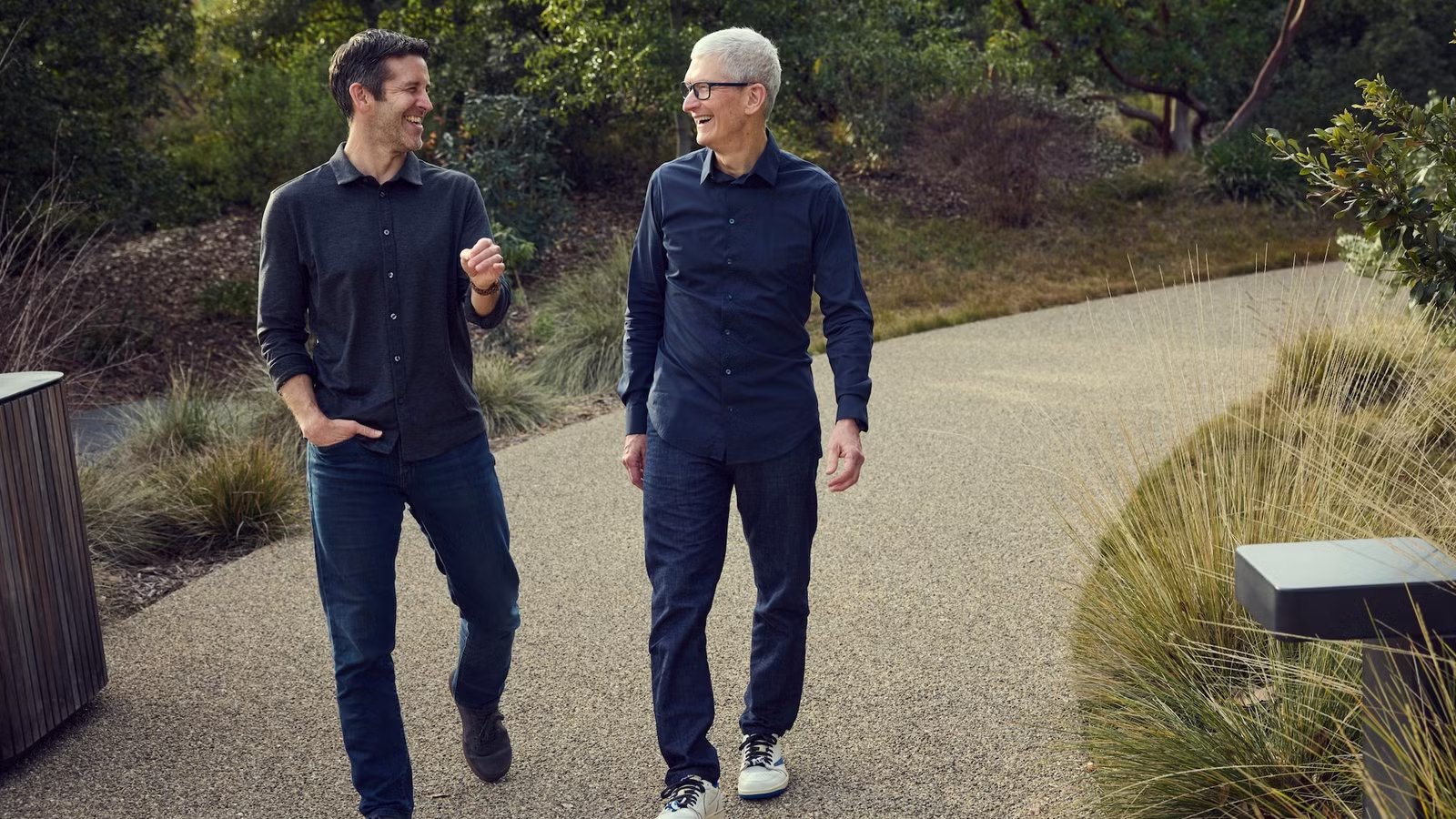
As rumored for months, Tim Cook is stepping down as Apple CEO. He will shift to an executive chair role on September 1st, 2026, when Senior Vice President of Hardware Engineering John Ternus will lead the company.
The move comes after a “thoughtful, long-term succession planning process,” according to Apple. Cook will still contribute to “certain aspects” of Apple as executive chair, including talks with politicians worldwide.
As part of the shift, Apple is naming Senior Hardware Technologies VP Johny Srouji to a new Chief Hardware Officer position, effective immediately. The position will give him an “expanded role” that covers both Ternus’ Hardware Engineering unit and hardware technologies.
Tim Cook’s long legacy
Big successes, but also a few failures
Tim Cook left Compaq to join Apple in 1998, shortly after co-founder Steve Jobs returned. He’s best known for turning around Apple’s operations, taking it from months of unsold stock and lengthy product rollouts to lean inventory and quick releases. He’s also known making smart bets on component purchases like flash memory, which helped make the 2005 iPod nano a hit and today helps Apple limit the damage of the AI-fueled RAM crisis.
He briefly stepped into the CEO role at Apple in 2009 during one of Jobs’ medical leaves, and again at the start of 2011. He formally took over the role in August 2011, when Jobs permanently stepped down as his health deteriorated.
Cook has greatly expanded Apple since taking over — it now has a market cap of over $4 trillion, or more than 1,000% what it was in 2011. The iPhone remains its central product, but the company under Cook’s watch has introduced hits like AirPods, Apple Watch, and Apple Silicon-based Macs. It also derives much more revenue from services, including Apple Music and Apple TV.
There have been notable missteps. A long-rumored car project never came to fruition. Vision Pro sales have been limited to a relatively small number of enthusiasts and professionals, and MacBooks between 2015 and 2020 were plagued by both keyboard quality issues and sluggish performance from Intel-based chips. Apple Intelligence also drew flak as Apple promised features that simply weren’t ready, and won’t be until a Google Gemini-powered Siri arrives this year.
Who is John Ternus, Apple’s new CEO?
A hardware genius with deep roots at Apple
John Ternus is no stranger to Apple, having worked at the company for 25 years. He first worked on Apple’s monitors, but in 2013 became a Vice President of Hardware Engineering that helped lead work on AirPods, iPads, and Macs. He took control of iPhone development in 2020 and took charge of Apple Watch work in 2022, the year after he became Senior VP.
Reports have circulated that Ternus was a likely candidate for the CEO position, both because of his product focus and personality. He’s “charismatic and well-liked,” according to Bloomberg. That makes him a potentially ideal leader for a company that still focuses on hardware.
In announcing the transition from Cook, Apple notes that Ternus has pioneered innovative material uses like the Apple Watch Ultra 3’s 3D-printed titanium, and has made strides forward in repairability and durability. If your iPhone or Mac lasts longer, you might have Ternus to thank.
His choice makes clear Apple’s leadership strategy. It’s still choosing veterans rather than outsiders, and doesn’t see the need for a shakeup any time soon.
Bluetooth
5.3
IP Rating
IP54
Driver Size
Custom high-excursion Apple driver
Weight
0.25 Pounds
Charging Port
USB-C
Compatibility
Apple devices
The fourth generation Apple AirPods feature a more comfortable design, an improved H2 chip, better sound quality, and the option for Active Noise Control.
