

When the first Cadillac Escalade rolled off the line in 1999, it did something no other vehicle had done quite so boldly: it turned a full-size SUV into an unapologetic status symbol. In the years since, the Escalade has been the best-selling full-size luxury SUV in North America, earning a place in American pop culture, from hip-hop videos to Hollywood productions, that no other SUV has come close to matching.
The 2027 Audi Q9 is the latest segment challenger, arriving with a fresh perspective on what a flagship SUV should offer. With the Q9, Audi is showing how it can compete with European rivals like the BMW X7 and Mercedes-Benz GLS, SUVs that have long defined the segment. Similarly, against the Lexus LX, it shows how digital-first design and old-school luxury can coexist.
Now comes its toughest North American challenger yet, and perhaps its most unexpected one: the Cadillac Escalade. It is a comparison that will divide opinion. Audi enthusiasts may bristle at the suggestion. Cadillac loyalists might feel the same way. But nonetheless, here we are.
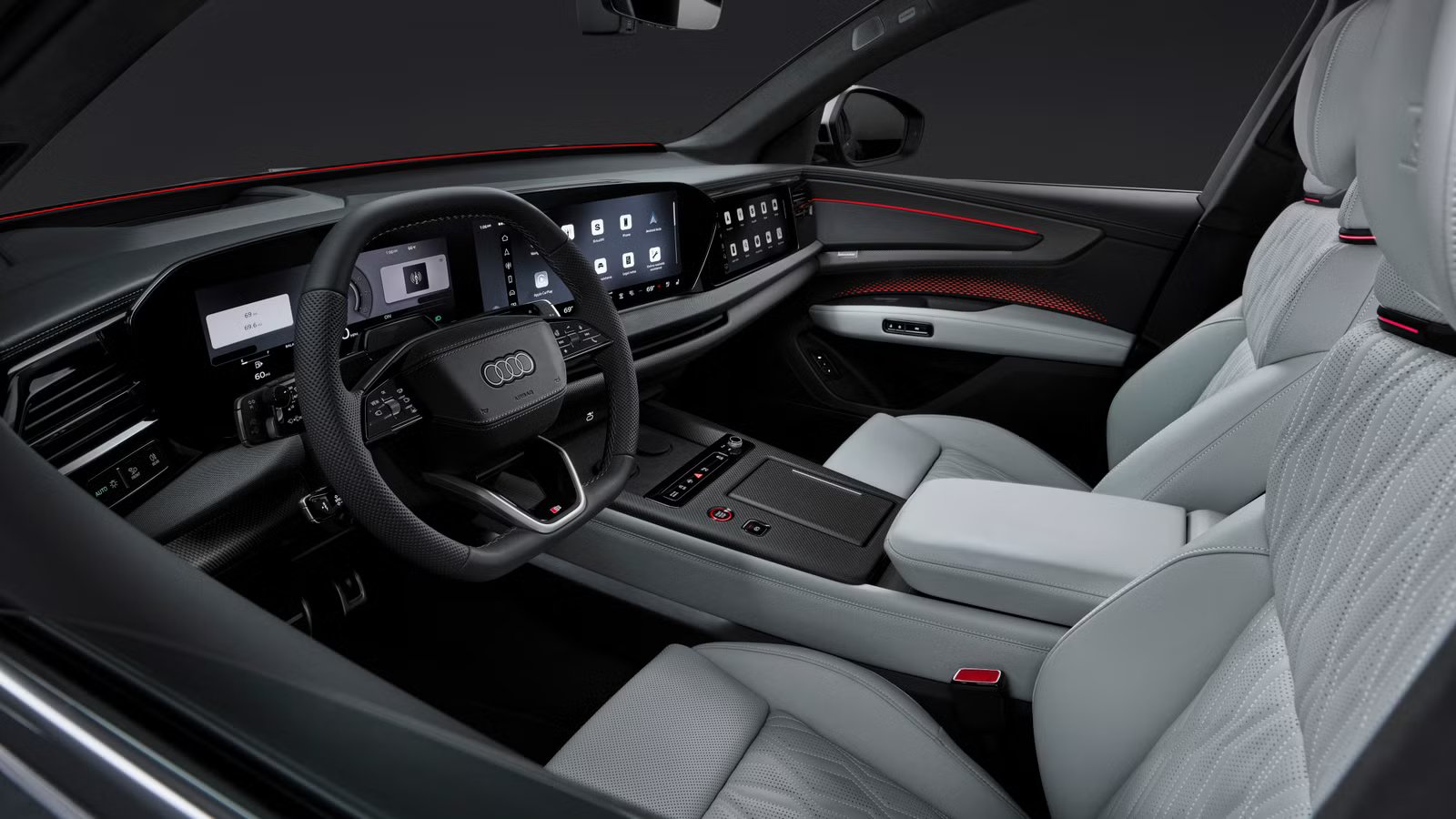
The Q9 makes its official world debut on July 28th. While the exterior remains under wraps, Audi recently opened the doors for a first look at the interior. Here is how it compares to a current Cadillac Escalade.
Two different definitions of what a flagship should be
One screen that dominates, three screens that integrate
The Escalade announces itself as soon as you open the door. A pillar-to-pillar, 55-inch curved Horizon Display spans the front of the cabin, reaching from the driver’s side to the passenger’s side. It is among the largest standard displays in any production SUV.
Google Built-in comes standard along with Wireless Apple CarPlay, Android Auto, and augmented reality navigation, while higher trims add a full-color heads-up display. Cadillac has always known that luxury buyers expect something beyond the ordinary, and the Escalade’s display delivers that immediately.
The Q9 takes a quieter approach, but not a lesser one. The Digital Stage offers three front displays: a driver instrument panel, an OLED central touchscreen, and a front passenger display for personal entertainment. By contrast, the Escalade’s single sweeping screen dominates the cabin and draws immediate attention, while the Q9’s individual screens blend seamlessly into the space. This style of integration in the Q9 is highlighted by indirect lighting beneath the MMI panoramic display, which creates a floating effect.
Additionally, the zero-layer interface shows the most relevant information without requiring the driver to swipe through sub-menus. While the Escalade emphasizes visual impact with its display, the Q9 ensures everything you need is readily accessible.
Related
Audi’s 639-HP RS 5 hybrid debuts with world-first quattro AWD
quattro with Dynamic Torque Control brings the RS 5 to life.
Two audio philosophies, both worth hearing
Speaker count versus sensory immersion
When it comes to audio, both SUVs take sound seriously.
The Escalade’s available AKG Studio Reference system tops out at 42 speakers with Dolby Atmos when the Executive Second Row package is fitted, creating a 360-degree stage that fills every corner of the cabin. The system is also thoughtful about personal audio, with front-seat headrest speakers that route calls and music privately without disturbing other passengers.
Audi’s Bang & Olufsen 4D sound system approaches the experience from a different direction. Rather than maximizing speaker count, it adds a sensory dimension the Escalade doesn’t offer: physical actuators built into the front seats that allow occupants to feel low frequencies as well as hear them. The Dynamic Interaction Light, an LED strip at the base of the windshield, syncs its color and rhythm to the music being played, while headrest speakers route calls and navigation prompts privately to the driver (the latter of which the Escalade does have).
If the Escalade surrounds you with sound, the Q9 makes you feel it. Both are genuinely impressive, and choosing between them comes down to what kind of listener you are.
Related
Cadillac’s F1 sedan is a 685-horsepower manual transmission you can’t buy
Developed in conjunction with Formula 1 for the 2026 season.
Where the Escalade earns its reputation
Executive Second Row package is hard to top
This is where the Escalade shines. The aforementioned Executive Second Row package transforms the second row into a first-class cabin. Fourteen-way power adjustable seats offer ventilation, massage, and power bolsters. Dual 12.6-inch infotainment screens, stowable tray tables, a rear command center, wireless charging pads, and headrest speakers add convenience. If you often carry second-row passengers, whether family members or work colleagues, it’s hard to find another option at this price point.
The Q9 offers six- or seven-seat configurations. In the optional six-seat layout, adjustable captain’s chairs are included. In both layouts, the outer second-row seat slides forward to ease third-row access without removing child seats. However, Audi has not confirmed a rear entertainment system for the Q9 comparable to what is found in the Escalade.
Radar Band Detection
X, K, Ka
Companion App
Drive Smarter
The Escort MAX 360c MKII is the follow-up to the standard MAX 360c radar detector. This enhanced version features longer-range detection with its updated dual-antenna platform and increased false alert filtering through Blackfin DSP integration.
Where the Q9 pulls ahead
What each brand considers non-negotiable
On the Escalade, power open and close doors are available on upper trims and include obstacle detection, a feature Cadillac introduced with the 2025 refresh after borrowing design cues from the electric Escalade IQ. It is a thoughtful system, though it remains an option rather than a standard feature across the lineup.
The Q9 takes the concept further and makes it universal. All four doors open at the push of a button on every model, opening to 90 degrees, with sensors that detect approaching cyclists and prevent the door from swinging into oncoming traffic. Drivers close them simply by pressing the brake pedal or fastening their seatbelt. For Audi, the electric door is not a premium add-on. It is the baseline.
The Q9’s panoramic sunroof covers about 16 square feet. It uses nine PDLC glass segments that dim electronically, eliminating the need for a traditional sunshade. An optional LED package adds 84 lights in up to 30 colors inside the roof. The Escalade’s available dual-pane SkyGlass roof with a power shade uses a more conventional design.
On materials, the Q9 deliberately moves away from high-gloss plastics and piano-black finishes that have dominated luxury interiors for the past decade. Dinamica microfiber, Fine Nappa leather, and matte-textured inlays in ash, lime, and carbon fiber give the Q9’s cabin a more contemporary, fingerprint-resistant feel. The Escalade’s interior is also beautifully done, with available semi-aniline leather, open-pore wood veneers, and 126-color ambient lighting, but it works within a more traditional luxury vocabulary.
Related
I ran a dealership express lube—these 4 services help your car last 200,000 miles
With new car prices at an all-time high, I’ve resolved to keep my current vehicle as long as possible.
New matrix LED headlights
More light, less glare, and a first for U.S. customers
Credit: Audi
The Q9 is also bringing to market something worth noting, even in an interior-focused comparison. Audi recently announced that the 2027 Q9 will be its first vehicle to offer Digital Matrix LED headlights to U.S. customers, a technology that has existed in Europe since 2013 but was blocked by DOT regulations until 2022.
The system uses over 25,000 individually controllable micro-LEDs to continuously reshape the beam pattern in real time, maintaining illumination while masking only the light that would hit oncoming drivers’ eyes. According to a recent AAA survey, six in 10 U.S. drivers struggle with headlight glare.
2027 Audi Q9 coming soon
The current Cadillac Escalade starts at $91,100, although a Platinum with all options can exceed $120,000, with the V-Series approaching $170,000. By contrast, the 2027 Audi Q9 should start near $80,000. Higher trim levels, such as the Premium Plus and Prestige, may run between $90,000 and $95,000.
The Escalade remains a benchmark among full-size luxury SUVs; however, Audi is positioning the Q9 toward the next generation of tech-centric luxury buyers. Audi will reveal the full details on the Q9 on July 28th, with North American deliveries expected as early as this November.
